
Bitumen Supplier in Philippines — Grades 60/70, 80/100 and 40/50 via Manila
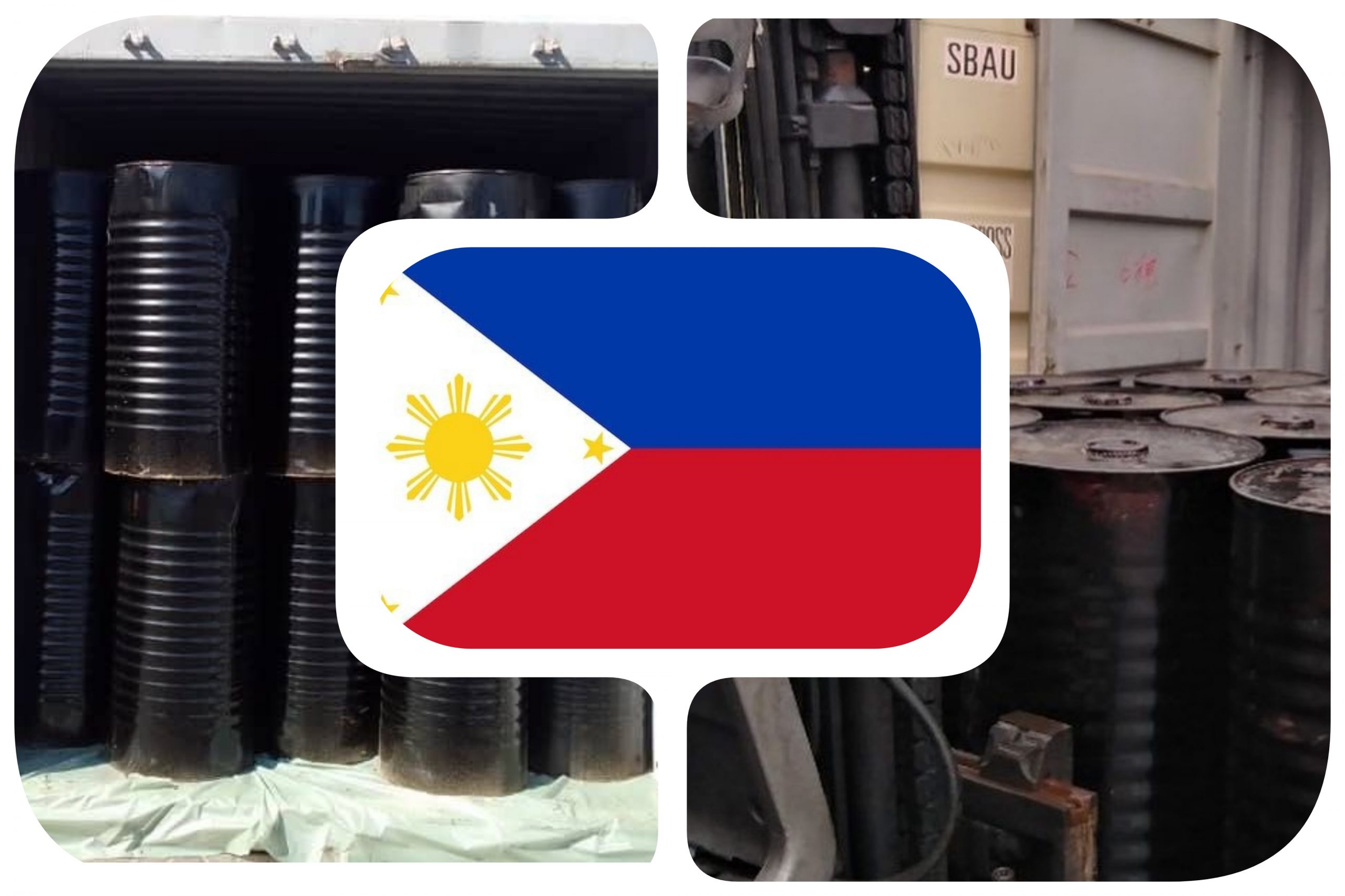
As a bitumen supplier in Philippines markets, Zumrut International Kimya delivers penetration grades 60/70, 80/100 and 40/50 into Manila, Cebu, Davao and Subic in drums, jumbo bags and bulk. The Philippines presents a supply problem few markets share: 7,600 islands, no land bridge between them, and around twenty typhoons a year that dictate when work can happen at all.
Choosing a bitumen grade for Philippine conditions
Penetration grade measures hardness at 25 °C: the lower the number, the harder the binder. Any bitumen supplier in Philippines road markets gets asked the same question first, and the answer usually surprises people: the rain does not change the grade.
Grade is matched to temperature. The Philippines is tropical maritime — consistently hot with a narrow daily and seasonal range, moderated by surrounding ocean. That temperature profile suits 60/70 well across almost the entire country.
What the rain does affect is stripping: the loss of adhesion between binder and aggregate under sustained moisture. That is solved through aggregate selection, mix design and anti-strip additives — not by switching to a softer binder, which only costs you rutting resistance.
| Grade | Penetration | Character | Where it fits in the Philippines |
|---|---|---|---|
| Bitumen 40/50 | 40–50 dmm | Hardest | Port aprons at Manila and Subic, container yards, NAIA and Clark airport pavements, industrial estates with heavy slow loading |
| Bitumen 60/70 | 60–70 dmm | Standard paving grade | The national default — expressways, national highways, urban arterials across Luzon, Visayas and Mindanao |
| Bitumen 80/100 | 80–100 dmm | Softest | Cold-mix patching, stockpile maintenance material, barangay and rural access roads where a crew works without hot plant |
Typical values. A batch certificate of analysis is issued before every shipment.
The typhoon factor
This is what genuinely separates the Philippines from other tropical markets, and it is a procurement issue rather than a material one.
Around twenty tropical cyclones enter Philippine waters annually, with the season concentrated between June and November. Two consequences follow. First, hot-mix paving windows compress into the drier months, which tightens binder demand from roughly December onwards. Second, post-typhoon road repair generates sudden, large and unplanned demand — often in the same weeks when stock is lowest.
A bitumen supplier in Philippines projects who has not planned around that cycle will be quoting long lead times exactly when you need material fastest. If your programme starts in the dry season, place the order well before the rains end.
Ports and the island problem
The Philippines has no land connection between its three main island groups, so every regional delivery is a separate shipping decision. This is the first thing a bitumen supplier in Philippines markets should establish before quoting.
| Port | Island group | Serves |
|---|---|---|
| Manila | Luzon | Metro Manila, Central and Southern Luzon — the largest concentration of road works |
| Subic and Batangas | Luzon | Alternatives to Manila, often less congested for bulk and project cargo |
| Cebu | Visayas | Central Visayas and the regional distribution hub for the island group |
| Davao | Mindanao | Davao Region and southern Mindanao |
| Cagayan de Oro | Mindanao | Northern Mindanao |
Landing everything at Manila and distributing by domestic coastal shipping adds a full handling cycle and cost for Visayas and Mindanao projects. For work in Cebu or Davao, discharging directly at the regional port is usually cheaper and faster despite the smaller vessel options. Tell us the project island rather than just the country and we will price the direct route.
Applications across Philippine projects
These are the applications a bitumen supplier in Philippines infrastructure work is most often asked to cover.
-
Expressways and national highways
The expansion programme across Luzon and the national road network linking provincial centres. High traffic and continuous heavy freight.
-
Urban roads
Metro Manila, Cebu, Davao and the regional cities — arterials and municipal networks, much of it rehabilitation under constant traffic.
-
Barangay and farm-to-market roads
The largest programme by length. Often surface treatment or cold-mix work carried out by crews without hot plant.
-
Airport pavements
NAIA, Clark, Mactan-Cebu and the regional airport upgrades, where harder grades are typically specified.
-
Port and industrial hardstanding
Container yards, port aprons and economic zone infrastructure at Subic, Batangas and the regional ports.
-
Roof and foundation waterproofing
Membranes and coatings across the building programme. In this rainfall regime, waterproofing is structural rather than cosmetic.
For hard grades used in waterproofing membranes rather than paving, see our oxidized bitumen range.
Working through the wet season
Hot-mix paving needs dry conditions and a dry base, which limits it through the June to November rains. That is a long constraint on an annual programme.
Emulsions, particularly cationic CSS-1 and CRS-1, extend the working window because water is already the carrier and they tolerate damp aggregate. Cutback grades cure by solvent evaporation and need a genuinely dry surface, so they are less forgiving here. Neither bonds to standing water, but emulsion is the more practical choice for maintenance work in a Philippine wet season.
See our comparison of cutback bitumen vs bitumen emulsion for the full picture.
Importing directly versus buying from a local trader
The Philippines has limited domestic bitumen production, so most binder used is imported. Working with an importing bitumen supplier in Philippines markets rather than a local reseller changes three things worth weighing.
Traceability. You receive the batch certificate of analysis for the material actually loaded, not a generic specification sheet. On DPWH and internationally funded projects this is frequently a contract requirement rather than a preference.
Price structure. A resold cargo carries the trader’s margin on top of landed cost. On 100 MT that margin is modest; on a multi-thousand-tonne contract it becomes a line item worth negotiating directly.
Lead time visibility. You see the production and sailing schedule rather than being told stock is on the way. Given how the typhoon season compresses the working programme, knowing the vessel and ETA matters more here than in most markets.
The trade-off is volume. Direct import starts at 100 MT, so for smaller maintenance quantities a local trader remains the practical route.
Bitumen price in the Philippines
Delivered price into Manila is built from four moving parts. Any bitumen supplier in Philippines trade quoting a flat number without naming these is quoting a number that will not hold.
Crude and vacuum bottom. Vacuum bottom is the feedstock and its price tracks crude with a lag. The largest single component.
Ocean freight. The Philippines is well served from the Gulf, with regular sailings from Jebel Ali and Bandar Abbas. Freight is a smaller share of delivered cost here than in Central or West Africa.
Domestic distribution. This is the Philippine-specific factor. Moving material between island groups adds a coastal shipping leg and a full handling cycle. Discharging at the regional port instead usually costs less than it appears.
Seasonality. Demand concentrates in the dry months and thins during the typhoon season. Ordering against that cycle rather than with it is where the real saving sits.
Indicative levels are published on our bitumen price page and updated weekly. A firm quote is issued against a specific quantity, discharge port and delivery window.
Payment, inspection and documentation
Our standard terms as a bitumen supplier in Philippines markets are 30% by TT in advance, balance against a copy of the Bill of Lading. The advance secures production and loading; the balance falls due once the cargo is demonstrably on the water and documented. For repeat contracts we also work against an irrevocable LC at sight.
A shipment travels with a commercial invoice, packing list, bill of lading, certificate of origin and the batch certificate of analysis. Import clearance runs through the Bureau of Customs, and DPWH-funded projects normally require the certificate of analysis to state the standard tested against — ASTM D946, AASHTO M20 or EN 12591 as applicable.
SGS, Bureau Veritas or the surveyor named in your contract can attend loading for quality and quantity. A batch test report is issued by our QC before every shipment regardless.
Useful references: the Department of Public Works and Highways publishes the standard specifications most national road contracts are tendered against, PAGASA publishes the tropical cyclone outlook that determines the working season, and ASTM International maintains the D946 specification for penetration grade binders.
Packing and container loading
Packing choice drives both delivered cost and what you need at destination. These are the options we ship as a bitumen supplier in Philippines projects, and the inter-island leg makes durability matter more here.
| Packing | Unit | Per 20′ container | Notes |
|---|---|---|---|
| Steel drum | 180 kg | 80 drums = 14.4 MT | New sealed drums; survives inter-island transhipment and needs no heated discharge |
| Steel drum | 200 kg | 80 drums = 16.0 MT | Lowest packing cost per tonne in drummed form |
| Jumbo bag | 300 kg | approx. 20 MT | Lower packing cost, requires forklift or crane at destination |
| Bulk bitutainer | 20–22 MT | 1 unit | Practical at Manila and Batangas where plants have heated tank storage |
Container figures are typical for standard 20′ dry containers and vary with the shipping line’s payload limit. Our minimum order of 100 MT is roughly seven containers of drummed product.
Frequently asked questions about bitumen supply in the Philippines
The questions below come up in almost every enquiry we receive as a bitumen supplier in Philippines markets.
Which bitumen grade is right for road construction in the Philippines?
60/70 for the large majority of national and provincial road work. The tropical maritime climate has consistent heat with a narrow range, which suits the standard paving grade well. Step down to 40/50 for port aprons, container yards, airport pavements and industrial estates. Use 80/100 for cold-mix patching and barangay roads.
Does the heavy rainfall mean we should use a softer grade?
No. Penetration grade is matched to temperature, not moisture. What rain affects is stripping, the loss of adhesion between binder and aggregate, which is addressed through aggregate selection, mix design and anti-strip additives. Choosing a softer binder because a site is wet costs you rutting resistance without solving the actual problem.
Should we land cargo at Manila or at a regional port?
For Luzon projects, Manila, Subic or Batangas. For Visayas, discharge directly at Cebu. For Mindanao, Davao or Cagayan de Oro. Landing everything at Manila and moving it by domestic coastal shipping adds a full handling cycle and cost. Send us the project island and we will price the direct route.
How does the typhoon season affect procurement?
Around twenty tropical cyclones enter Philippine waters each year, concentrated between June and November. Hot-mix paving compresses into the drier months, which tightens binder demand from December onwards, and post-typhoon repair generates sudden unplanned demand. If your programme starts in the dry season, order well before the rains end.
What can we apply during the wet season?
Emulsion grades are the most practical option, because water is already the carrier and cationic types tolerate damp aggregate. Cutback needs a genuinely dry surface and hot mix needs both dry conditions and a dry base. Nothing bonds to standing water, but emulsions are the most forgiving of residual moisture.
What is the minimum order quantity?
100 MT, which is roughly seven 20′ containers of drummed product or five bulk bitutainers. Mixed grades within one shipment are accepted provided each grade reaches one full container.
What are your payment terms?
30% by TT in advance with the balance settled against a copy of the Bill of Lading. The advance covers production and loading; the balance falls due once the cargo is documented and on the water. Irrevocable LC at sight is available for repeat contracts.
Do you supply cutback bitumen and emulsion to the Philippines?
Yes. MC, RC and SC cutback grades for prime coats and surface dressing, and anionic and cationic emulsions for tack coats and slurry seals. Both can be combined with penetration grades in the same shipment provided each product reaches one full container.
Specification
Bitumen 60/70
| Bitumen 60/70 | Test method | Unit | Specification |
|---|---|---|---|
| Specific gravity @ 25°C | ASTM D70 | Kg/cm3 | 1.01/1.06 |
| Penetration @ 25°C | ASTM D5 | mm/10 | 60/70 |
| Softening point °C | ASTM D36 | °C | 49/56 |
| Ductility @25 °C | ASTM D113 | cm | 100 min |
| Loss on heating(wt) % | ASTM D6 | wt % | 0.2 max |
| Drop in penetration after heating % | ASTM D5-D6 | % | 20 max |
| Flashpoint °C | ASTM D92 | °C | 232 min |
| Solubility in Trichloroethylene | ASTM D2042 | wt % | 99 min |
| Spot test | A.A.S.H.O.T102 | Negative |
Bitumen 80/100
| Bitumen 80/100 | Test method | Unit | Specification |
|---|---|---|---|
| Specific gravity @ 25°C | ASTM D70 | Kg/cm3 | 1.01/1.06 |
| Penetration @ 25°C | ASTM D5 | mm/10 | 80/100 |
| Softening point °C | ASTM D36 | °C | 42/50 |
| Ductility @25 °C | ASTM D113 | cm | 100 min |
| Loss on heating(wt) % | ASTM D6 | wt % | 0.2 max |
| Drop in penetration after heating % | ASTM D5-D6 | % | 20 max |
| Flashpoint °C | ASTM D92 | °C | 250 min |
| Solubility in CS2(wt) % | ASTM D4 | wt % | 99.5 min |
| Spot test | A.A.S.H.O.T102 | Negative |
Bitumen 40/50
| Bitumen 40/50 | Test method | Unit | Specification |
|---|---|---|---|
| Specific gravity @ 25°c | ASTM D70 | Kg/cm3 | 1.01/1.06 |
| Penetration @ 25°c | ASTM D5 | mm/10 | 40/50 |
| Softening point °c | ASTM D36 | °C | 52/60 |
| Ductility @25 °c | ASTM D113 | cm | 100 min |
| Loss on heating(wt) % | ASTM D6 | wt % | 0.2 max |
| Drop in penetration after heating % | ASTM D5-D6 | % | 20 max |
| Flash point °c | ASTM D92 | °C | 250 min |
| Solubility is CS2(wt) % | ASTM D4 | wt % | 99.5 min |
| Spot test | A.A.S.H.O.T102 | _____ | Negative |
Bitumen supply in other markets
Alongside our work as a bitumen supplier in Philippines trade, we ship penetration, oxidized, cutback and emulsion grades across Southeast Asia, Africa, Central Asia and South America. See the global bitumen supply guide for country-level detail, or compare grades on our penetration grade bitumen page.
Order bitumen for the Philippines
Send us the grade, quantity, packing and project island — not just the country — and we will come back with a firm price, a production schedule and the documentation list for clearance. If you have a DPWH specification or a tender document and are not sure which grade meets it, send the specification instead.
Dubai +971 4 566 4998 · Ankara +90 507 246 9520 · Isfahan
