
Cutback Bitumen vs Bitumen Emulsion for Tack Coat and Prime Coat: Differences, Advantages and Disadvantages
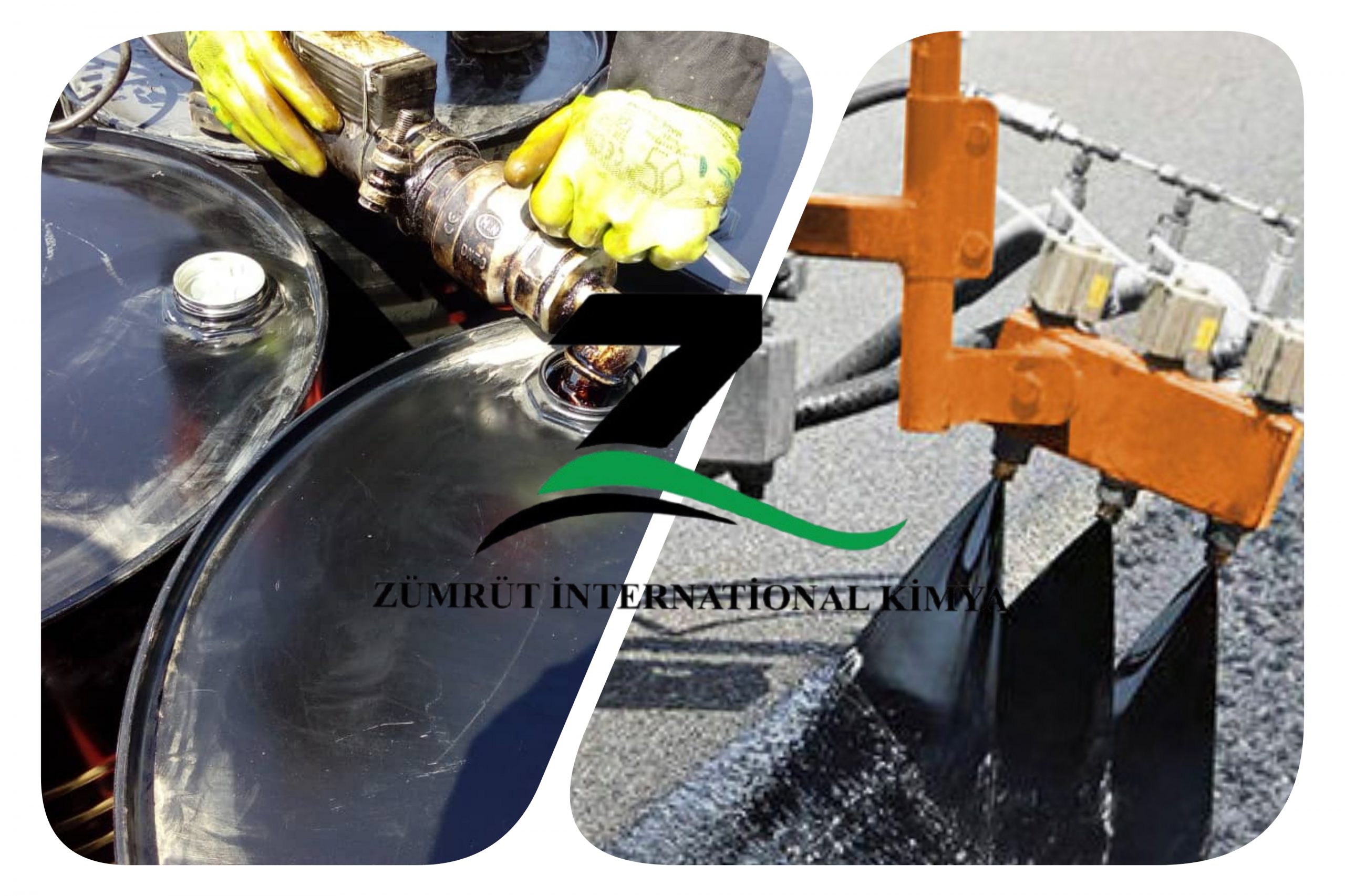
The cutback bitumen vs bitumen emulsion choice comes down to one thing: both products make bitumen sprayable without heating it to 150 °C, but they do it differently. Cutback dissolves bitumen in a petroleum solvent. Emulsion suspends bitumen droplets in water. That single difference — solvent versus water — drives everything else: cost, curing behaviour, safety, environmental exposure, and which one will actually work on your site.
Cutback bitumen vs bitumen emulsion at a glance
| Cutback bitumen | Bitumen emulsion | |
|---|---|---|
| Carrier | Petroleum solvent — naphtha, kerosene or gas oil | Water, with an emulsifying agent |
| How it cures | Solvent evaporates | Emulsion breaks, then water evaporates |
| Application temperature | 30–100 °C depending on grade | Ambient to 70 °C |
| Damp surface | Will not bond — needs a genuinely dry surface | Tolerates residual moisture; cationic grades bond to damp aggregate |
| Flammability | Flammable liquid — low flash point, especially RC grades | Not flammable |
| Storage stability | Stable for long periods in sealed drums | Limited shelf life; can separate, must not freeze |
| Cost per tonne | Higher — solvent is expensive and is lost to the atmosphere | Lower — water is the carrier |
| Emissions | Releases VOCs as the solvent evaporates | Minimal — the carrier is water |
| Regulatory position | Restricted or banned for many uses in the EU, US and Australia | The specified default in most modern standards |
The rest of this guide works through the cutback bitumen vs bitumen emulsion comparison for the two applications where the choice matters most on site: prime coats and tack coats.
What is cutback bitumen?
Cutback bitumen is penetration grade bitumen blended with a petroleum solvent to lower its viscosity so it can be sprayed at low temperature. The solvent is a carrier, not a component of the final product — once applied, it evaporates and leaves the original bitumen behind, bonded to the surface.
Grades are classified by how fast the solvent leaves, which is set by which solvent is used:
| Class | Solvent | Cures | Typical use |
|---|---|---|---|
| Rapid Curing (RC) | Naphtha | Hours | Tack coats, surface dressing where traffic must return quickly |
| Medium Curing (MC) | Kerosene | 1–2 days | Prime coats, patching — the slower cure allows penetration |
| Slow Curing (SC) | Gas oil | Weeks or longer | Dust control, road mix work where the material must stay workable |
The number in a grade name — MC-30, MC-70, RC-250 — is the lower bound of the kinematic viscosity range at 60 °C in centistokes. Higher number, thicker product.
Where cutback still wins the cutback bitumen vs bitumen emulsion argument
Cutback penetrates. That is its real advantage and the reason it remains the preferred prime coat material on many specifications: the solvent carries bitumen down into the top few millimetres of a granular base, binding the surface fines from within rather than coating them from above.
It is also unaffected by cold. An emulsion that freezes is destroyed; cutback is not. On projects where storage temperature cannot be controlled or material sits for months before use, cutback is the more forgiving product.
What is bitumen emulsion?
Bitumen emulsion is bitumen dispersed as microscopic droplets in water, held in suspension by an emulsifying agent. It looks like brown liquid and sprays at close to ambient temperature. When it contacts aggregate, the emulsion breaks — the droplets coalesce, the colour changes from brown to black, and the water separates and evaporates, leaving continuous bitumen behind.
Emulsions are classified by the electrical charge on the bitumen droplets, and this determines which aggregates they bond to:
| Type | Charge | Bonds best to | Common grades |
|---|---|---|---|
| Cationic | Positive | Siliceous aggregate — granite, quartzite, most crushed stone | CRS-1, CRS-2, CMS-2, CSS-1, CSS-1h |
| Anionic | Negative | Calcareous aggregate — limestone, dolomite | RS-1, RS-2, MS-2, SS-1, SS-1h |
| Non-ionic | Neutral | Specialist applications | Limited commercial use |
Cationic grades dominate commercially because most aggregates used in road construction carry a negative surface charge, and opposite charges attract. If your aggregate is limestone, an anionic grade may bond better — this is worth checking rather than assuming.
Reading the grade code
The letters tell you setting speed: RS rapid setting, MS medium setting, SS slow setting. A leading C means cationic. A trailing h means harder base bitumen. So CSS-1h is a cationic, slow-setting emulsion made with a harder binder — a common tack coat specification.
Cutback bitumen vs bitumen emulsion for a prime coat
This is where the question has a genuinely technical answer rather than a commercial one.
Cutback penetrates better. MC-30 and MC-70 are the traditional prime coat materials precisely because kerosene carries bitumen into the base. An emulsion tends to break at the surface, leaving a film rather than a penetrated layer — particularly on tight or fine-graded bases.
But emulsion is increasingly specified anyway, driven by VOC regulation rather than performance. Where cutback use is restricted, slow-setting grades diluted with water (SS-1, CSS-1) are the substitute. They work, but they need a more open base texture and careful attention to application rate.
Practical position: if your specification permits cutback and the base is tight, MC-30 or MC-70 gives the better prime. If regulation restricts cutback, or the base is open-textured, a diluted slow-setting emulsion is a workable alternative. Do not substitute one for the other without adjusting the application rate.
Cutback bitumen vs bitumen emulsion for a tack coat
Here the answer is clearer: emulsion, in most cases.
A tack coat is a very light film applied between pavement layers — typically 0.15 to 0.40 litres per square metre residual binder. Emulsion can be diluted with water and sprayed uniformly at that rate; undiluted cutback at the same rate is difficult to distribute evenly, and streaked coverage means partially bonded pavement.
Emulsion also tolerates a slightly damp surface, which matters when paving resumes after overnight dew or a rain interruption. RC cutback needs the surface genuinely dry.
Where RC cutback still appears in tack coat specifications is on projects requiring very fast turnaround in dry conditions, or where emulsion storage is impractical. See our full comparison of prime coat vs tack coat for application rates and technique.
Advantages and disadvantages
Weighing cutback bitumen vs bitumen emulsion means accepting that each product fails in a different way.
-
Cutback advantages
Penetrates granular bases properly. Long storage life. Unaffected by freezing. Predictable in cold or uncontrolled storage conditions.
-
Cutback disadvantages
Higher cost per tonne. Flammable, requiring careful handling. Releases VOCs. Restricted or banned for many uses in regulated markets. Needs a dry surface.
-
Emulsion advantages
Lower cost. Not flammable. Minimal emissions. Applies at ambient temperature. Bonds to damp aggregate. Sprays evenly at very light rates.
-
Emulsion disadvantages
Limited shelf life. Destroyed by freezing. Can separate in storage and needs agitation. Charge must be matched to aggregate type.
-
Where cutback is the right call
Prime coats on tight bases, remote sites with long material storage, cold climates without controlled storage, and specifications that name a cutback grade.
-
Where emulsion is the right call
Tack coats, surface dressing, slurry seals, cold mix, crack sealing, and any project where VOC regulation restricts solvent-based products.
Cost comparison
On a straight cutback bitumen vs bitumen emulsion price comparison, emulsion is cheaper per tonne, and the reason is simple: the carrier is water rather than a petroleum solvent that costs nearly as much as the bitumen and is then lost to the atmosphere.
But price per tonne is the wrong comparison. Emulsion is typically 55 to 70 percent bitumen by weight, the rest being water. Cutback is a higher proportion bitumen. To compare properly, work on residual binder cost — what you pay per tonne of bitumen actually left on the road after curing. On that basis the gap narrows, though emulsion generally remains cheaper.
The larger cost differences are usually elsewhere: heating fuel, equipment, storage losses, and the programme cost of waiting for a cutback prime to cure. Current indicative levels for both are on our bitumen price page.
Storage, handling and safety
These two products fail in completely different ways, and the handling requirements have almost nothing in common.
Cutback is a flammable liquid. Keep drums sealed, upright, under cover and away from ignition sources. Never apply direct flame; use indirect heating only, and keep well below the flash point — RC grades in particular have low flash points. Crews need respiratory protection where solvent vapour accumulates.
Emulsion is not flammable but is far more fragile in storage. It must not freeze — freezing breaks the emulsion irreversibly. It separates over time and needs periodic agitation. Shelf life is measured in weeks to a few months, not years. Storage tanks should be kept above roughly 10 °C and below 60 °C, and different emulsion types must never be mixed in the same tank.
Useful references: emulsion grades follow ASTM D977 for anionic and ASTM D2397 for cationic types, and cutback grades follow ASTM D2027 (MC), D2028 (RC) and D2026 (SC).
Frequently asked questions
These are the questions we are asked most often on cutback bitumen vs bitumen emulsion selection.
What is the main difference between cutback bitumen and bitumen emulsion?
The carrier. Cutback dissolves bitumen in a petroleum solvent that evaporates after application. Emulsion suspends bitumen droplets in water, which separates and evaporates once the emulsion breaks. That difference drives everything else — cost, flammability, emissions, storage life, and whether the material will bond to a damp surface.
Can bitumen emulsion replace cutback bitumen?
For tack coats, surface dressing and most cold-mix work, yes — emulsion is usually the better choice. For prime coats it is a substitution rather than an equivalent: cutback penetrates a granular base more effectively, and an emulsion prime needs a more open base texture and a different application rate. Do not swap one for the other without adjusting the specification.
In the cutback bitumen vs bitumen emulsion comparison, which is better for a tack coat?
Emulsion, in most cases. Tack coats are applied at very light rates and emulsion can be diluted with water to spread evenly at those rates. It also tolerates a slightly damp surface. Cationic slow-setting grades such as CSS-1 and CSS-1h are the common specification.
Which is better for a prime coat?
Cutback, on technical grounds — MC-30 for tight bases and MC-70 for open ones. The kerosene carrier takes bitumen into the base rather than leaving a film on top. Emulsion primes are used where VOC regulation restricts cutback, and they work, but penetration is not as good on fine-graded surfaces.
Which one cures faster?
It depends on the grade, not the product type. RC cutback cures in hours; SC cutback takes weeks. Rapid-setting emulsion breaks in minutes; slow-setting takes hours. Comparing the two product families on curing speed is not meaningful — compare the specific grades you are choosing between.
Why is cutback bitumen restricted in some countries?
Volatile organic compound emissions. The solvent in cutback evaporates into the atmosphere, and air quality regulations in the EU, parts of the US and Australia restrict or prohibit its use for applications where emulsion is a workable alternative. Prime coats are often the last permitted use, and even that is narrowing.
Can cutback and emulsion be used on the same project?
Yes, and it is common: MC cutback for the prime coat, emulsion for the tack coat and any surface treatment. They must never be mixed in the same tank or sprayer, and the equipment must be flushed between products.
How long can each be stored?
Cutback keeps for a long period in sealed drums under cover. Emulsion is far more limited — weeks to a few months — and it must not freeze, since freezing breaks it irreversibly. It also separates over time and needs agitation before use. For projects with uncertain timing, cutback is the more forgiving product to hold in stock.
Do you supply both cutback bitumen and bitumen emulsion?
Yes. MC, RC and SC cutback grades and cationic and anionic emulsions, shipped in drums and bulk with a batch certificate of analysis before every shipment. Minimum order 100 MT, FOB Jebel Ali, Mersin or Bandar Abbas.
Detailed specification comparison
| Aspect | Cutback Bitumen | Bitumen Emulsion |
|---|---|---|
| Definition | Bitumen diluted with petroleum solvents to reduce viscosity. | Bitumen dispersed in water with the help of emulsifying agents. |
| Base Medium | Solvents like gasoline, kerosene, or diesel. | Water and emulsifiers. |
| Application Temperature | Usable at lower temperatures but requires some heating in certain cases. | Usable at ambient temperatures without heating. |
| Types | Rapid-Curing (RC), Medium-Curing (MC), and Slow-Curing (SC). | Cationic, Anionic, and Non-ionic emulsions. |
| Viscosity Reduction | Achieved through the addition of petroleum solvents. | Achieved through dispersion in water. |
| Evaporation Process | Solvent evaporates after application, leaving behind the solid bitumen. | Water evaporates or separates, leaving the bitumen to adhere to the surface. |
| Environmental Impact | Releases harmful solvent vapors into the atmosphere. | Minimal environmental impact; water-based and eco-friendly. |
| Energy Consumption | Requires heating during application, consuming more energy. | Minimal energy consumption; no heating required. |
| Cost | Higher production cost due to petroleum solvent usage. | Generally more economical due to water being the primary dispersant. |
| Safety | Flammable due to the presence of volatile solvents. | Non-flammable, making it safer to store and handle. |
| Storage & Transportation | Easier to store for longer periods but requires careful handling of solvents. | Requires proper conditions to prevent freezing or separation. |
| Adhesion Properties | Provides good adhesion to aggregates but depends on solvent type. | Better adhesion to aggregates, especially with cationic emulsions. |
| Drying Time | Depends on the evaporation rate of the solvent; RC dries quickly, SC dries slowly. | Faster drying due to water evaporation, depending on emulsion type. |
| Durability | High durability after solvent evaporation. | High durability after water separation, similar to conventional bitumen. |
| Usage in Cold Weather | More suitable for cold weather applications due to reduced viscosity. | Can be used in cold weather, but freezing can be an issue. |
| Common Applications | Prime coats, tack coats, surface dressing, and cold mix asphalts. | Soil stabilization, cold mix asphalt, surface dressing, and crack sealing. |
| Compatibility with Aggregates | Compatibility depends on the solvent and aggregate type. | High compatibility with various aggregates, especially with cationic emulsions. |
| Environmental Regulations | Increasingly restricted due to volatile organic compound (VOC) emissions. | Favored in green construction due to lower emissions and eco-friendliness. |
| Long-term Trends | Declining usage due to environmental and safety concerns. | Increasing adoption due to sustainability and safety advantages. |
Not sure which one your project needs?
Send us the application, the aggregate type and the climate, and we will tell you which product fits — including when the answer is the cheaper one. If your specification names a grade you are not familiar with, send the specification instead and we will confirm what it requires before you order.
Dubai +971 4 566 4998 · Ankara +90 507 246 9520 · Isfahan
