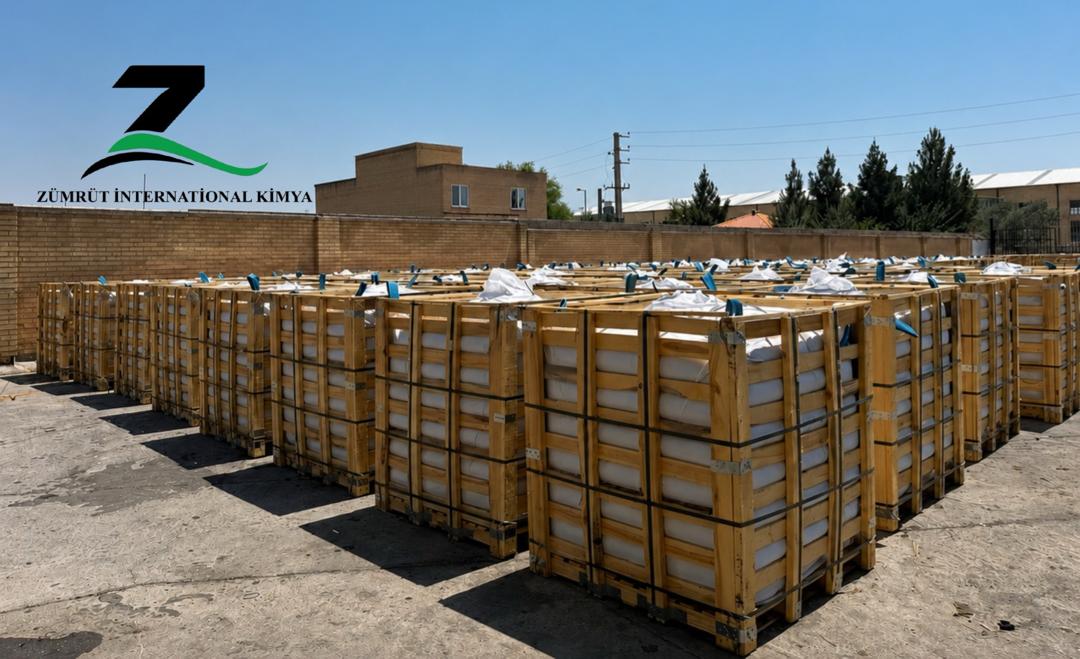
Bitumen Price Today: International Bitumen Price List 2026

Bitumen Price
Bitumen Price 2026 | Bitumen 60/70, 80/100 & Oxidized Bitumen Prices

Price list reviewed weekly · Updated July 2026

Today Bitumen Price 2026 | International Bitumen Price List

FOB and CIF quotations for penetration bitumen, oxidized bitumen, cutback and emulsion, loading from Jebel Ali, Iskenderun and Bandar Abbas. Built for traders, importers, distributors and contractors who need a firm offer, container-loading figures and export documentation in one place.

Today's bitumen price: Bitumen 60/70 is USD 530 ±10 per metric ton FOB in new steel drums and USD 520 ±10 in one-ton jumbo bags, week of 26 July 2026. Oxidized bitumen in 25 kg bags is USD 740 ±10. Bulk ranges from USD 335 ±5 for Iranian origin up to USD 598 ±5 West Africa. Full list below — and where you land inside each band depends on quantity, destination port and payment terms, which is what the written offer confirms.

Price basis
FOB / CFR / CIF
Currency
USD per metric ton
Min trial order
100 MT
Offer returned
Same working day

International bitumen price list 2026

Today's Bitumen Price List — All Export Grades

Every grade below is in current production and available for export. We issue prices as written offers rather than publishing numbers that would be stale within days — but the specification, packing and loading detail you need to compare offers is all here.

Basis: FOB, USD / MT Packing: New steel drum · jumbo bag · 25 kg bag Updated: 26 July 2026
All figures in USD per metric ton, FOB, packed cargo. The ± tolerance is our working band for the week — the exact figure inside it depends on quantity, destination and payment terms, and is confirmed on the written offer. Oxidized bitumen is quoted in 25 kg meltable bags; the level shown is indicative across grades 85/25, 90/15 and 115/15, with harder grades confirming toward the upper end. Cutback and emulsion are quoted per enquiry because solvent and water content make a single published figure misleading.
Product name Grade / standard Drum Jumbo bag / 25 kg bag Last updated
Penetration grade bitumen — ASTM D946 / EN 12591
Bitumen 60/70 60/70 · ASTM D946 530 ±10 $/MT 520 ±10 $/MT 26 Jul 2026
Bitumen 80/100 80/100 · ASTM D946 532 ±10 $/MT 522 ±10 $/MT 26 Jul 2026
Bitumen 40/50 40/50 · ASTM D946 535 ±10 $/MT 525 ±10 $/MT 26 Jul 2026
Viscosity grade & regional origin
VG Bitumen VG10 · VG20 · VG30 · VG40 535 ±10 $/MT 525 ±10 $/MT 26 Jul 2026
Iraq Bitumen Iraqi origin · 60/70 spec 515 ±10 $/MT On enquiry 26 Jul 2026
Oxidized (blown) bitumen — 25 kg meltable bag
Oxidized Bitumen 85/25 85/25 On enquiry 740 ±10 $/MT 26 Jul 2026
Oxidized Bitumen 90/15 90/15 On enquiry 740 ±10 $/MT 26 Jul 2026
Oxidized Bitumen 115/15 115/15 On enquiry 740 ±10 $/MT 26 Jul 2026
Cutback bitumen & emulsion — quoted per enquiry
MC30 MC-30 · ASTM D2027 Request Quote Flexitank / ISO tank Updated Weekly
MC70 MC-70 · ASTM D2027 Request Quote Flexitank / ISO tank Updated Weekly
SS-1 SS-1 · anionic · ASTM D977 Request Quote IBC / flexitank Updated Weekly
CRS-1 CRS-1 · cationic · ASTM D2397 Request Quote IBC / flexitank Updated Weekly

Bulk Bitumen Price by Origin

Bulk cargo prices on a different basis: these are FOB levels by loading origin, for heated tanker or bitutainer discharge. Read them as origin benchmarks rather than as a direct comparison with the packed prices above — a bulk figure from one region can sit higher than a drummed price from another, because origin, freight and refinery economics all differ. Iranian-origin bulk is the clearest example: it prices well below every other origin, which is why buyers who can accept that origin and handle heated discharge see the largest saving available anywhere on this page.

Basis: Bulk, FOB origin, USD / MT Discharge: Heated tanker · bitutainer Updated: 26 July 2026
Bulk FOB levels by loading origin, USD per metric ton, week of 26 July 2026. Minimum parcel size and vessel availability vary by origin — confirm both before fixing a price, because on bulk the loading slot is usually the binding constraint rather than the dollar figure.
Loading origin Bulk FOB price Spread vs Iran Last updated
Iran 335 ±5 $/MT 26 Jul 2026
South Korea 525 ±5 $/MT +190 26 Jul 2026
Mideast Gulf 550 ±5 $/MT +215 26 Jul 2026
Singapore 597 ±5 $/MT +262 26 Jul 2026
West Africa 598 ±5 $/MT +263 26 Jul 2026

How to read the ± tolerance: the figure is our working level for the week and the band is real, not padding. Where you land inside it comes down to quantity, destination port, payment terms and how tight the loading window is. Ten containers on TT advance with a flexible shipment month price at the bottom of the band; a single container on an LC with a fixed loading week prices at the top. Every offer we issue names one exact figure and a validity date.

Looking for a grade not listed? We also supply the full penetration range, VG grades, PG grades, polymer modified bitumen, Australian C-grades and bitumen roll sheet.

Pricing mechanics

How Bitumen Prices Are Calculated

A bitumen export price is built from five stacked components: the vacuum residue feedstock (55–70% of an FOB drummed price), packing (14–22%), inland haulage to the loading port (4–9%), terminal handling and documentation (3–7%), and margin plus trade finance (3–6%). Ocean freight and marine insurance then sit on top of the FOB figure to produce a CFR or CIF price.

Bitumen is the heavy residue left at the bottom of the barrel after vacuum distillation, so its cost tracks crude oil — usually Brent, as published daily by the U.S. Energy Information Administration — but with a lag of two to six weeks and never at a one-to-one ratio. A rule of thumb used across the trade is that a USD 10 per barrel move in Brent works through to roughly a 15–25% change in the bitumen price per ton, though the pass-through is softened by refinery hedging and existing drum stock.

The part most buyers miss is that refineries have a choice about what to do with that residue. When high-sulphur fuel oil cracks are strong, vacuum residue is worth more as bunker blendstock than as paving binder. Supply to the bitumen market tightens, and export offers firm up even on a flat crude day. If you are trying to time a purchase, watch the HSFO crack alongside Brent rather than Brent alone.

Cost stack of a typical FOB drummed price

Indicative shares for containerised drummed cargo. Bulk cargo removes the packing line entirely, which is why bulk FOB levels sit well below drummed.
Cost component Share of FOB What drives it Can you control it?
Bitumen / vacuum residue 55–70% Brent crude, HSFO crack, refinery run rates No — market determined
Packing & palletising 14–22% Steel drum price, liners, pallets, filling labour Yes — largest lever you have
Inland haulage to port 4–9% Refinery-to-terminal distance, local diesel Partly — via loading port choice
Terminal, docs & inspection 3–7% Handling, stuffing, COO, COA, SGS attendance Yes — by ordering larger lots
Margin & trade finance 3–6% Payment terms, working capital cost Yes — advance payment prices better

For importers and freight planners

Packing, Drum Weights and Container Loading

The single most common costing error we see from new importers is comparing a drummed FOB price against a bulk FOB price as though they were the same product. They are not. Here is the loading arithmetic you need to compare offers properly.

Quick figures: a 20′ FCL holds 80 steel drums. With 150 kg net drums that is 12 MT per container; with 180 kg net drums it is 14.4 MT. One-ton jumbo bags load 20 MT per 20′. A bitutainer or flexitank carries 20–24 MT. To convert a per-ton price to a per-drum price, multiply by the drum net weight and divide by 1,000.

Typical loading figures for export from Gulf and Turkish terminals. Confirm exact net weights and tare on the offer sheet, since drum gauge and container tare vary by supplier and shipping line.
Packing type Unit net weight Units per 20′ FCL Net cargo per 20′ Units per MT Best suited to
New steel drum (short) 150 kg 80 drums 12.0 MT 6.67 Small lots, long storage, remote sites
New steel drum (long) 180 kg 80 drums 14.4 MT 5.56 Oxidized grades, cutback, resale in drums
Jumbo bag (meltable) 1,000 kg 20 bags 20.0 MT 1.00 Contractors with a hot-mix plant, no tank farm
Bitutainer 1 unit 20–22 MT Repeat buyers with heated discharge
Flexitank 1 unit 20–24 MT Emulsion and cutback, single-use
Bulk vessel parcel From 3,000 MT Terminals and large road programmes

Why drummed cargo costs more per ton

Look at this week's numbers and the drum premium seems trivial: USD 530 drummed against USD 520 in jumbo bags for Bitumen 60/70, a USD 10 spread. That headline is misleading, because the real cost is in the container. Twelve tons of drummed cargo and twenty tons of jumbo-bag cargo occupy the same 20′ box and attract the same ocean freight. If freight to your port is USD 1,800 per container, that is USD 150 per ton on drums against USD 90 per ton on jumbo bags — a USD 60 difference in landed cost, six times the USD 10 you see on the FOB line. This is the single most useful piece of arithmetic on this page.

A new steel drum is a manufactured good in its own right. Every ton of drummed bitumen carries roughly six to seven drums, plus liners, pallets, strapping and the labour to fill and stuff them. When international steel prices move, drummed bitumen prices move with them independently of crude. Drums also cost you volume: 12 MT in a container that could have carried 20 MT in jumbo bags means you pay ocean freight on air.

The trade-off is flexibility. Drums need no heated facility at destination, they store for long periods, they survive rough inland transport, and they can be sold on in small lots. For a first trial order, or for a market where you are reselling to small contractors, drums are usually still the right answer even at the higher per-ton cost. For a road programme with its own tank farm, bulk or bitutainer will land materially cheaper.

Converting between price units

  • Per ton to per drum: price/MT × drum net weight (kg) ÷ 1,000. A quote of USD 550/MT on 150 kg drums is USD 82.50 per drum.
  • Per ton to per container: price/MT × net cargo per container. USD 550/MT on 150 kg drums is USD 6,600 per 20′ FCL, before freight.
  • Comparing drum against bulk: always add the freight difference. Two containers of drums (24 MT) versus one flexitank (24 MT) is a very different freight bill for the same tonnage.
  • Short tons and barrels: 1 metric ton = 1.1023 short tons. Some North American indices quote per short ton, which makes them look cheaper than they are by about 10%.

Comparing offers correctly

FOB, CFR or CIF — Which Price Are You Comparing?

We quote on three bases. FOB covers the cargo loaded on board at the origin port; you arrange and pay ocean freight and insurance. CFR adds ocean freight to our account. CIF adds freight plus marine insurance. Import duty and customs clearance at destination are always yours. Two quotations are only comparable when the Incoterm and the named port match exactly.

This sounds obvious and it still costs importers money every month. A FOB quotation from one supplier and a CIF quotation from another are not a like-for-like comparison, and on long routes the freight component can be 15–25% of the landed cost. If you are running a tender, specify one Incoterm and one destination port for every bidder. We quote FOB, CFR and CIF. The remaining terms appear in the table so you can read any supplier's offer on the same basis and see exactly what is and is not included. The definitions follow the ICC Incoterms® 2020 rules, which are the recognised international standard.

Simplified allocation of cost under ICC Incoterms® 2020 for containerised bitumen. We quote the first three; the rest are shown for comparison only. Always name the port alongside the term, e.g. “CIF Mombasa”.
Incoterm Loading at origin Ocean freight Marine insurance Import duty & clearance Typical user
FOB Seller Buyer Buyer Buyer Traders with own freight rates
CFR Seller Seller Buyer Buyer Importers who self-insure
CIF Seller Seller Seller Buyer Most first-time importers
CPT Seller Seller (to named place) Buyer Buyer Inland destinations — not quoted by us
DAP Seller Seller Seller Buyer Site delivery — not quoted by us
EXW Buyer Buyer Buyer Buyer Rarely practical — not quoted by us

Loading ports we quote from

We load from Jebel Ali (UAE), Iskenderun and Mersin (Turkey) and Bandar Abbas (Iran). Origin affects more than freight distance: it determines the certificate of origin you receive, which in turn affects duty treatment and, in some markets, whether the cargo is acceptable at all. If your buyer or lender has origin restrictions, tell us before we quote — it changes which terminal we price from. Our regional coverage is set out by market on our bitumen supplier by country page.

Trade terms

Payment Terms and Export Documentation

Payment terms are part of the price. Somebody has to finance the gap between refinery payment and your funds arriving, and that cost is priced in.

TT advance

Telegraphic transfer before loading, in full or as a deposit with the balance against shipping documents. The cheapest option for the buyer because it carries no finance cost for us. Standard for trial orders.

LC at sight

Irrevocable letter of credit from an acceptable bank, payable on presentation of documents. Protects both sides on larger contracts. Costs more than TT because of bank charges and the discounting period, so expect a modest premium per ton.

Balance against documents

Deposit at order confirmation, balance released against scanned bill of lading and certificate of analysis. A practical middle ground for repeat buyers with a track record.

Documents issued with every shipment

Documentation that clears customs without argument is worth as much as a few dollars a ton to an importer. A standard set includes:

  • Commercial invoice and packing list — matched to the LC or contract wording exactly.
  • Bill of lading — with on-board notation where the LC requires it.
  • Certificate of origin — chamber-attested, from the loading country.
  • Certificate of analysis — batch-specific, against the agreed standard such as ASTM D946 for penetration grades.
  • Certificate of quantity and weight — from the terminal or an independent surveyor.
  • Third-party inspection report — SGS, Intertek or Geo-Chem, at loading, on request.
  • Material safety data sheet — see our oxidized bitumen MSDS.

How to request a quotation that comes back firm

  1. State the grade and standard

    “Bitumen 60/70 to ASTM D946” is unambiguous. “Road bitumen” is not, and will cost you a round of emails.

  2. State the packing

    Drum (and net weight), jumbo bag, bitutainer, flexitank or bulk. This alone can shift the price by more than 20%.

  3. State the quantity

    In metric tons or number of containers. Tell us if this is a trial with repeat volume behind it, because it affects what we can commit.

  4. Name the Incoterm and port

    “CIF Dar es Salaam”, not “delivered price”. We quote FOB, CFR and CIF — name which one, and the exact port.

  5. State payment terms and shipment window

    TT or LC, and the month you need to load in. Both change the number we can quote.

Prices by product

Bitumen Prices Grade by Grade

Each family prices on its own logic. Knowing which one you are buying tells you what to expect before you even ask for a number.

Bitumen 60/70 Price

Bitumen 60/70 is the benchmark export grade and the one meant when the trade refers to “the bitumen price per ton” without qualifying it. It is quoted most often as FOB, in new steel drums, from a Gulf or Turkish terminal, in USD per metric ton. Because it is the most traded grade it is also the most competitive, and the grade where the drum-versus-bulk spread is widest.

With a penetration of 60 to 70 dmm at 25°C, this grade suits hot-mix asphalt in hot and temperate climates. It dominates road programmes from West Africa through South and South-East Asia, which is why demand for it is the clearest signal of paving-season activity in any region.

For traders, 60/70 is the grade where origin arbitrage is most visible. The same specification loading from three different terminals in the same week can differ by USD 40–80 per ton once freight to a given destination is included. If you are buying for resale rather than for a specific project, ask us to quote from more than one origin and compare landed cost, not FOB.

StandardASTM D946 / EN 12591
Penetration @ 25°C60–70 dmm
Softening point49–56°C
Main price driverCrude, freight, packing

Specification and datasheet: Bitumen 60/70 · Standard: ASTM D946-09

Bitumen 80/100 Price

Bitumen 80/100 is softer than 60/70, with penetration between 80 and 100 dmm. Quotations usually land within a narrow band of 60/70 because the refinery cost is similar, but availability — not economics — is what actually moves the price.

Fewer Gulf refineries run 80/100 continuously, so it is produced in campaigns. An enquiry that lands between campaigns gets a price reflecting waiting time or blending, not raw material cost. Buyers with a flexible shipment window can often close that gap simply by aligning with a production run, which is worth asking about explicitly when you enquire.

The grade suits cooler climates and applications where flexibility matters more than rut resistance, and it is also the standard feedstock for producing bitumen emulsion and cutback bitumen. If you are buying to blend locally rather than to pave, this is usually the grade to price.

StandardASTM D946
Penetration @ 25°C80–100 dmm
Softening point45–52°C
Main price driverProduction campaign timing

Specification: Bitumen 80/100 · Also see Bitumen 40/50 for hotter climates

Oxidized Bitumen Price

Oxidized bitumen (blown bitumen) is made by blowing air through hot penetration bitumen in a reactor. It carries a consistent premium over penetration grades because blowing costs energy, reactor time and yield. The premium widens as the grade gets harder: 115/15 requires substantially more blowing than 85/25 and prices accordingly.

Grade names give the softening point in degrees Celsius followed by the penetration in dmm, so 85/25 softens at about 85°C with a penetration around 25. Packing is the second cost factor: most oxidized bitumen ships in 25 kg meltable bags designed to go into the melter whole, and those bags plus palletising add more per ton than a steel drum does. Buyers able to accept 180 kg drums often save on that line.

For traders, the important commercial difference is demand character. Oxidized bitumen goes into roofing membrane and roll sheet, pipe coating, sealants, adhesives and insulating compounds — not roads. It therefore follows construction and manufacturing cycles rather than paving seasons, and holds value better through the monsoon months when penetration grades soften. If your portfolio is weighted entirely to paving grades, oxidized grades are a genuine counter-seasonal hedge.

Range supplied75/25 → 150/5
Top export grades85/25 · 90/15 · 115/15
Packing25 kg bag · 180 kg drum
Main price driverBlowing cost, grade hardness

Specifications: 85/25 · 90/15 · 115/15 · 150/5 · What is oxidized bitumen?

Cutback Bitumen Price

Cutback bitumen is penetration bitumen thinned with a petroleum solvent so it can be sprayed or mixed cold. Pricing it means pricing two commodities: typically a fifth to a third of the product by volume is solvent, and solvent tracks the light end of the barrel — kerosene and gasoil — not the heavy end.

Those two ends of the barrel do not always move together. In a winter with strong heating demand, kerosene can rally while bitumen is flat, and MC30 becomes more expensive than the bitumen market alone would suggest. MC30 carries more solvent than MC70, so it is the more solvent-exposed of the pair. This is the one family where it genuinely pays to check the light-distillate market before fixing your price.

Freight is the second consideration: you are shipping solvent as well as binder, so the cost per ton of actual bitumen delivered is higher than the headline. Cutback also has a flash point, which governs stowage and in some cases classifies the cargo as dangerous goods — check this with your forwarder before booking, because it affects both freight cost and which lines will carry it. For projects within reach of a blending facility, importing penetration grade and cutting back locally is sometimes cheaper, and we will say so when the numbers point that way.

StandardASTM D2027 (MC)
Range suppliedMC / RC / SC, 30–3000
Packing180 kg drum · flexitank · ISO tank
Main price driverKerosene / gasoil market

Curing families: medium curing (MC) · rapid curing (RC) · slow curing (SC)

Bitumen Emulsion Price

Bitumen emulsion suspends bitumen droplets in water with an emulsifier so it can be applied cold without solvent. It is typically 40–45% water by weight, which means on a delivered basis you pay ocean freight on that water — the cost per ton of actual binder landed is far higher than a headline comparison with penetration bitumen suggests.

SS-1 is a slow-setting anionic emulsion under ASTM D977, used for prime coats, fog seals and soil stabilisation. CRS-1 is a rapid-setting cationic emulsion under ASTM D2397, used for tack coats and chip seals where a fast break is needed. The cationic and anionic families are not interchangeable — they behave differently against different aggregate chemistries.

Emulsion also has a real shelf life, commonly a few weeks to a few months depending on grade, storage temperature and agitation, and it can break or settle irreversibly if it freezes or cooks inside a container on a long voyage. For that reason our honest advice to buyers more than a short voyage away is to check whether local emulsion production exists first. Where a project genuinely needs imported emulsion we supply the full range, but we would rather tell you the economics are marginal than sell you freight on water.

StandardASTM D977 / D2397
Residue content55–60% bitumen
Packing200 L drum · IBC · flexitank
Main price driverWater content vs freight

Background: What is bitumen emulsion? · Use in prime and tack coats

Market overview

Bitumen Market Overview 2026

Four forces set the tone in any given week, and the interesting weeks are the ones where two of them pull against each other.

Brent crude

Sets the feedstock floor. Pass-through is real but slow — two to six weeks — and partial. Track the EIA daily Brent series alongside the high-sulphur fuel oil crack, because when fuel oil pays better refiners divert residue away from bitumen and availability tightens regardless of crude direction.

Ocean freight

Decides whether an attractive FOB number survives the voyage. Red Sea routing decisions, Gulf equipment availability and peak-season surcharges have moved East Africa and South Asia landed costs by double-digit percentages inside a single quarter. For bulk, the constraint is the small world fleet of heated bitumen tankers, so parcel timing matters more than the day rate.

Regional demand

Demand is seasonal and hemispheric. Northern paving programmes lift buying through spring and summer; the South and South-East Asian monsoon shuts sites down from roughly June to September; Gulf and African importers stock ahead of their own dry seasons. Public infrastructure budgets and election cycles layer on top, so demand arrives in waves.

Supply chain

Refinery turnarounds, drum-plant capacity, steel prices, port congestion and payment routing decide whether a good price can actually be executed. In a tight month the binding constraint is rarely the dollar figure — it is whether anyone can confirm a loading slot inside your shipment window.

What this means for your buying strategy

  • Do not buy exclusively on spot. Projects that source only on spot tend to buy at seasonal highs. Map your consumption phases at the start of the year and position orders 60–90 days ahead of each phase.
  • Emergency procurement is the most expensive bitumen you will ever buy. When a project runs behind and you need cargo in ten days, you pay spot, expedited freight and premium drum availability all at once.
  • Watch your own currency, not just USD. Bitumen is denominated in dollars globally. For importers in Turkey, Pakistan, Nigeria or Ghana, local-currency cost can spike badly even when the USD price is flat. Currency hedging is a legitimate part of bitumen procurement.
  • Fix the Incoterm before you compare. The cheapest FOB offer is frequently not the cheapest landed cost.
  • Buy grade, not just price. An off-spec cargo that fails a destination lab test costs more than any discount you negotiated. Insist on a batch-specific certificate of analysis and consider third-party inspection at loading.

Summary

Factors Affecting Bitumen Prices

Six variables account for nearly all of the difference between two quotations for the same grade. If you know where you sit on each, you can predict roughly where your number lands before you ask.

1. Feedstock cost

Brent sets direction; the HSFO crack decides how much vacuum residue reaches the bitumen market at all. Two to six weeks of lag is normal.

2. Packing

The largest controllable line. Drums add steel, liners, pallets and labour per ton and cost you container volume. Bulk removes all of it but needs heated handling at both ends.

3. Freight and Incoterm

Routing, equipment availability, congestion and surcharges to your specific port. In some quarters this moves landed cost more than crude does.

4. Order quantity

Documentation, inspection and terminal handling are largely fixed per shipment. Across one container they weigh heavily per ton; across ten, much less.

5. Grade and processing

Straight-run penetration grades sit at the bottom. Oxidized adds reactor time, cutback adds solvent, emulsion adds water and emulsifier, PMB adds polymer. Each adds its own market exposure.

6. Terms and timing

Advance payment prices better than an LC because someone finances the gap. Peak-season enquiries compete for loading slots. And every offer has a validity window.

About the supplier

Why Choose Zumrut International Kimya?

We have supplied bitumen and petroleum products since 2011, and the company was built around one idea: buyers deserve a supplier who knows the product, not just the price list. That shapes how we quote. If a grade is wrong for your climate, or emulsion makes no economic sense over your distance, we say so before we send a number.

Our supply position is not purely trading. We hold ownership in a gilsonite mine and a bitumen refinery in western Iran, and shareholding positions in paraffin wax and petroleum jelly production facilities. Having a stake in what gets produced means we can speak to availability and consistency directly, rather than passing on whatever a broker chain hands us.

Most of our clients are industrial and trading buyers — road contractors, construction material importers, distributors, drilling companies, ink and paint manufacturers. What they need is reliable volume, consistent specification and documentation that clears customs without drama. We are not the right fit for everyone: if you want spot quantities with no technical follow-up, there are faster options. But if you source regularly and want a supplier who holds grade, meets schedules and answers when something needs sorting, that is where we work well.

  • Three operating offices — Dubai (export hub, Business Bay), Ankara (regional coordination and logistics), Isfahan (production liaison and technical support).
  • Full grade range from one desk — penetration, oxidized, cutback, emulsion, VG, PG, PMB, membrane, gilsonite and drilling materials.
  • Three loading origins — Jebel Ali, Iskenderun/Mersin and Bandar Abbas, so origin can be matched to your duty treatment and lender requirements.
  • Third-party inspection on request — SGS, Intertek or Geo-Chem at loading, with certificate of analysis and certificate of origin.
  • Written, dated offers — every quotation states grade, packing, quantity, Incoterm, loading window and validity period. No verbal indications.
Trading since
2011
Offices
Dubai · Ankara · Isfahan
Min trial order
100 MT
Payment
TT advance · LC at sight

Buyer questions

Frequently Asked Questions

What is the price of bitumen per ton today?

For the week of 26 July 2026, our FOB levels are USD 530 ±10 per metric ton for Bitumen 60/70 in new steel drums and USD 520 ±10 in one-ton jumbo bags. Bitumen 80/100 is USD 532 ±10 drummed, Bitumen 40/50 and VG grades USD 535 ±10, Iraqi-origin drummed USD 515 ±10, and oxidized bitumen in 25 kg bags USD 740 ±10. Bulk cargo runs from USD 335 ±5 FOB Iran to USD 598 ±5 FOB West Africa.

Where you land inside each band depends on four things: quantity, destination port, payment terms and how tight your loading window is. Ten containers on TT advance with a flexible shipment month price at the bottom of the band; one container on an LC with a fixed loading week prices at the top. Send us the grade, packing, quantity, Incoterm and destination port and you will have a firm written offer naming one exact figure, with a validity date, the same working day.

What is the price of Bitumen 60/70 per ton?

As of 26 July 2026, Bitumen 60/70 is USD 530 ±10 per metric ton FOB in new steel drums and USD 520 ±10 in one-ton jumbo bags. The USD 10 spread between the two is the drum premium: steel, liners, pallets and the container volume you lose because 80 drums hold 12 MT where 20 jumbo bags hold 20 MT. On a landed basis that volume difference usually matters more than the USD 10 itself.

Bulk is where the real saving sits, but it is origin-dependent rather than a simple discount: FOB Iran is USD 335 ±5 while FOB Mideast Gulf is USD 550 ±5 for the same specification. If you can accept Iranian origin and have heated discharge at destination, that is the largest single saving available. If you cannot, drummed or jumbo-bag cargo from the Gulf or Turkey is the practical route. Full specification is on our Bitumen 60/70 page.

How many drums of bitumen are in a 20ft container?

A 20-foot container holds 80 steel drums. The tonnage depends on drum net weight:

  • 150 kg drums (short drum) → 80 drums = 12 MT net; 6.67 drums per metric ton.
  • 180 kg drums (long drum) → 80 drums = 14.4 MT net; 5.56 drums per metric ton.

For comparison, one-ton jumbo bags load 20 bags for 20 MT per 20′, and a bitutainer or flexitank carries 20–24 MT. Always confirm net weight and tare on the offer sheet, because drum gauge and container tare vary by supplier and shipping line.

How do I convert a bitumen price per ton to a price per drum?

Multiply the price per metric ton by the drum net weight in kilograms, then divide by 1,000. A quotation of USD 550 per MT on 150 kg drums works out at USD 82.50 per drum. On 180 kg drums the same per-ton price is USD 99.00 per drum.

To get the container value, multiply the per-ton price by the net cargo per container: USD 550/MT on 150 kg drums is USD 6,600 per 20′ FCL on an FOB basis, before ocean freight. One further caution when comparing indices: some North American postings quote per short ton, which is 0.907 metric tons, making them look roughly 10% cheaper than they are.

What is the difference between FOB and CIF bitumen price?

FOB (Free On Board) covers the cargo loaded on board the vessel at the origin port; you arrange and pay ocean freight, marine insurance, import duty and clearance. CIF (Cost, Insurance and Freight) adds ocean freight and marine insurance to the seller's account, so the number is higher but covers more. CFR sits between the two: freight included, insurance on your account.

The practical consequence is that FOB and CIF quotations are not comparable unless the Incoterm and named port match exactly. On long routes freight can be 15–25% of landed cost, which is more than most negotiated discounts. If you are running a tender, specify one Incoterm and one destination port for every bidder. Definitions follow the ICC Incoterms® 2020 rules.

Does the bitumen price follow crude oil?

Yes, but loosely and with a lag. Bitumen is the vacuum residue left after crude distillation, so its cost tracks Brent — typically two to six weeks behind, and never one-to-one. A working rule across the trade is that a USD 10 per barrel move in Brent feeds through to roughly a 15–25% change in bitumen price per ton.

The complication is that vacuum residue has an alternative buyer. When high-sulphur fuel oil cracks are strong, refiners divert residue into bunker blendstock instead of paving binder, bitumen supply tightens, and export prices firm even on a flat or falling crude day. If you are timing a purchase, watch the HSFO crack alongside the EIA Brent spot series, not Brent alone.

What is the minimum order quantity (MOQ) for bitumen export?

Our minimum order is 100 metric tons for containerised cargo. That works out neatly as five 20-foot containers of one-ton jumbo bags (20 MT each), or eight to nine 20-foot containers of 150 kg drums (12 MT each, so 96–108 MT depending on how you round). Tell us which packing you want and we confirm the exact container count and tonnage on the offer.

The minimum sits at 100 MT rather than a single container for a practical reason: documentation, third-party inspection and terminal handling are largely fixed per shipment, and spread across 12 tons they add so much per ton that the price stops being competitive for you. At 100 MT those costs are diluted enough that the figure we quote is one you can actually trade on.

For bulk cargo the minimum depends on vessel size and loading port, typically from around 3,000 MT for a dedicated parcel. Emulsion and cutback in flexitank have their own minimums driven by tank capacity. If your requirement is below 100 MT, tell us anyway — we can sometimes consolidate you with another shipment to the same port, though not every month.

What payment terms do you accept for bitumen orders?

Three standard structures. TT advance — telegraphic transfer before loading, in full or as a deposit with balance against shipping documents; the cheapest for the buyer because it carries no finance cost. LC at sight — irrevocable letter of credit from an acceptable bank, payable on presentation of documents; protects both sides on larger contracts but carries bank charges, so expect a modest premium per ton. Balance against documents — deposit at order confirmation, balance released against scanned bill of lading and certificate of analysis, for repeat buyers with a track record.

Payment terms are part of the price. The longer the gap between our payment to the refinery and your funds arriving, the more working capital sits in the deal, and that cost is priced in.

Which countries do you export bitumen to?

Regularly to West, East and Southern Africa; South and South-East Asia including India, Bangladesh, Malaysia, Vietnam, Thailand, Cambodia, Indonesia and the Philippines; East Asia including China, Taiwan and South Korea; across the GCC and wider Middle East; the CIS and Caucasus; and into Europe and Latin America on a project basis.

We load from Jebel Ali in the UAE, Iskenderun and Mersin in Turkey, and Bandar Abbas in Iran, which between them cover most destinations efficiently. Origin also determines your certificate of origin and therefore duty treatment, so tell us if your buyer or lender has origin restrictions. Market-by-market detail is on our bitumen supplier by country page.

How often are your bitumen prices updated?

We review the export price list weekly and re-issue it when the market has moved enough to matter, and sooner in volatile weeks — a sharp crude move, a freight disruption, a refinery turnaround announcement. That is why fixed figures are not posted on this page: a published number is out of date within days, and quoting a stale price to a buyer who then commits to it serves nobody.

Every written offer carries its own validity period, stated on the offer sheet. Inside that window the price is firm and we honour it. Outside it, ask again and we re-quote against current levels.

How can I receive today's bitumen quotation?

Fastest route is WhatsApp — message +90 507 246 95 20 or +98 913 288 4959 with your grade, packing, quantity, destination port and required Incoterm, and our desk replies the same working day. You can also email info@bitumenoxidised.com or use the contact form.

Include those five details and you get a firm number first time instead of a round of clarifying questions. If you are not sure which grade you need, describe the application and the climate instead, and our technical team will recommend a grade before quoting.

Request a quotation

Get Today's Bitumen Price for Your Port

Send the grade, packing, quantity, destination port and Incoterm. You will have a firm written offer with a stated validity period the same working day.

Dubai — Burlington Tower, Business Bay · +971 4 566 4998
Ankara — Gölbaşı · +90 312 544 5481
info@bitumenoxidised.com
Get Today's Bitumen Price via WhatsApp