
Difference Between SS-1 and CSS-1 Bitumen Emulsion: Charge, Aggregate Match and When to Use Each
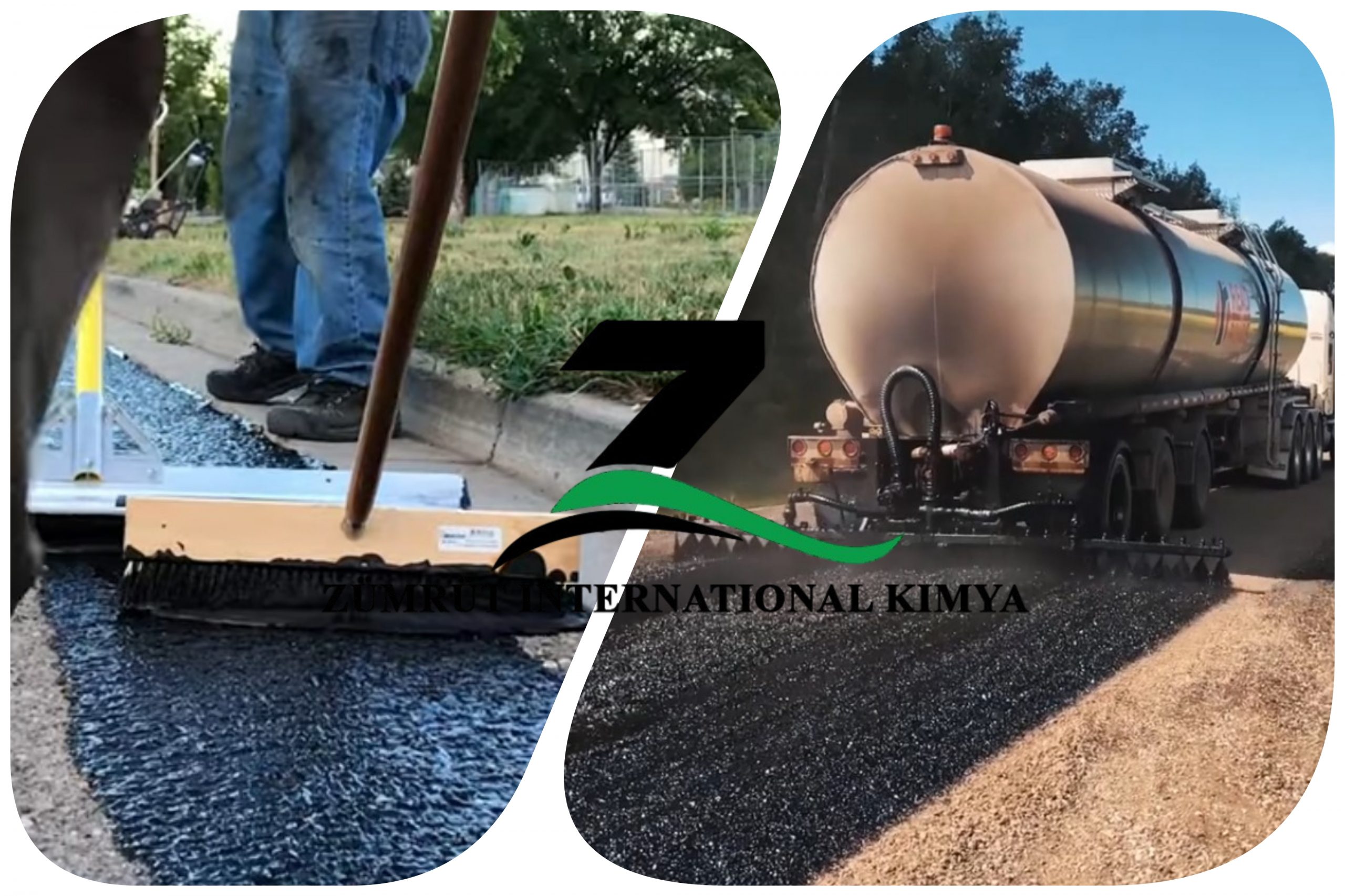
The difference between SS-1 and CSS-1 comes down to one property: the electrical charge on the bitumen droplets. SS-1 is anionic, negatively charged. CSS-1 is cationic, positively charged. Both are slow-setting emulsions used for tack coats, prime coats and slurry work, but that single difference decides which aggregates each will bond to, how the emulsion breaks, and which one your specification should name.
Difference between SS-1 and CSS-1 at a glance
| SS-1 (anionic) | CSS-1 (cationic) | |
|---|---|---|
| Droplet charge | Negative | Positive |
| Emulsifier type | Fatty acid soaps, alkaline | Amine salts, acidic |
| Typical pH | Alkaline, above 7 | Acidic, around 2 to 4 |
| Bonds best to | Limestone, dolomite and other calcareous aggregate | Granite, quartzite, siliceous aggregate — most crushed stone |
| Breaking mechanism | Water evaporation only | Electrochemical attraction to the aggregate, then evaporation |
| Damp aggregate | Poor — needs a dry or near-dry surface | Tolerates residual moisture |
| Setting speed | Slow — both grades are slow-setting | Slow, but breaks more reliably in damp or cool conditions |
| Standard | ASTM D977 | ASTM D2397 |
| Market share | Declining — specialist use | Dominant worldwide |
The rest of this guide works through the difference between SS-1 and CSS-1 in detail: why charge matters, which aggregate suits which, and what happens when the wrong one is specified.
Why droplet charge creates the difference between SS-1 and CSS-1
In an emulsion, bitumen exists as microscopic droplets suspended in water. The emulsifier sits at the surface of each droplet and gives it an electrical charge. Because like charges repel, the droplets stay apart instead of coalescing — that is what keeps the emulsion stable in the drum.
When the emulsion contacts aggregate, that charge determines what happens next.
The point most descriptions get wrong: almost all mineral aggregates carry a net negative surface charge in water. Limestone is not positively charged — it is simply less negative than granite, and its surface chemistry raises the local pH, which destabilises an anionic emulsifier and lets an SS-1 break. Granite and quartzite are strongly negative, which is why a cationic emulsion with positively charged droplets is drawn to them electrostatically and bonds far more reliably.
That is the practical reason CSS-1 has displaced SS-1 across most of the world: the majority of crushed stone used in road construction is siliceous.
Reading the grade code
The letters are systematic, and once you know them the whole emulsion range makes sense — including where the difference between SS-1 and CSS-1 sits within it.
| Code element | Meaning | Example |
|---|---|---|
| C (leading) | Cationic. No C means anionic | CSS-1 is cationic; SS-1 is anionic |
| RS | Rapid setting — breaks in minutes | CRS-1, CRS-2 for surface dressing |
| MS | Medium setting | CMS-2 for cold mix |
| SS | Slow setting — stays workable, mixes with fine aggregate | SS-1, CSS-1 for tack coats and slurry |
| 1 or 2 | Viscosity class. 2 is more viscous | CRS-2 is thicker than CRS-1 |
| h (trailing) | Harder base bitumen | CSS-1h for tack coats needing more stiffness |
So CSS-1h reads as: cationic, slow-setting, viscosity class 1, made with a harder base binder. A common tack coat specification.
Where SS-1 still makes sense
SS-1 has lost ground, but it has not disappeared, and there are jobs where it remains the better choice.
Limestone aggregate. Where the aggregate is genuinely calcareous, an anionic emulsion bonds well and there is no reason to pay for a cationic grade.
Slurry seal and micro-surfacing with limestone fines. The slower, more controlled break of an anionic system gives longer working time in the mixer.
Dust control and soil stabilisation. Where the requirement is penetration and binding rather than a fast structural bond.
Where the specification names it. Some agency specifications still call for SS-1 by name, and substituting a cationic grade without approval is a compliance failure regardless of technical merit.
Where CSS-1 is the right answer
Siliceous aggregate — granite, quartzite, basalt, most crushed stone. This covers the majority of road construction.
Damp conditions. The electrochemical bond forms even when the aggregate carries residual moisture, which extends the working window after dew or a rain interruption.
Tack coats. CSS-1 and CSS-1h diluted with water are the standard tack coat specification in most modern practice, applied at 0.15 to 0.40 litres per square metre residual binder. See our guide to prime coat vs tack coat for application technique.
Cold mix and patching. Reliable coating of aggregate at ambient temperature.
Humid and tropical climates. Where an anionic emulsion would struggle to break by evaporation alone.
What goes wrong when the charge is mismatched
This is the part that matters on site, and it is where the difference between SS-1 and CSS-1 stops being theoretical.
Spray an anionic SS-1 onto strongly siliceous aggregate and the droplets are electrostatically repelled. The emulsion may still dry, but the bond formed is weak and the binder film strips off the stone under traffic and water. The failure shows up as ravelling, loss of chippings, or a surface treatment that comes apart in the first wet season.
The reverse mismatch is less dramatic but still costly: a cationic emulsion on highly calcareous aggregate can break prematurely, before it has spread properly, leaving uneven coverage.
If you do not know your aggregate’s mineralogy, ask the quarry. It costs nothing and it is the single most useful piece of information for this decision.
Storage and handling
Both grades share the same vulnerabilities, and here the difference between SS-1 and CSS-1 disappears — every emulsion behaves the same way in storage, and differently from anything you deal with in penetration or cutback bitumen.
Never let emulsion freeze. Freezing breaks the emulsion irreversibly and the drum is scrap. Store above roughly 10 °C.
Do not overheat. Above about 60 °C the water begins to evaporate from the surface and a skin forms.
Never mix types. Anionic and cationic emulsions in the same tank will neutralise each other and coagulate immediately. Flush equipment thoroughly between products.
Agitate before use. Emulsions separate over time, with heavier bitumen settling. Gentle circulation restores uniformity; violent agitation can break it.
Shelf life is weeks to months, not years. Plan orders against your programme rather than stockpiling.
Reference standards: anionic emulsions including SS-1 follow ASTM D977, and cationic emulsions including CSS-1 follow ASTM D2397, both published by ASTM International.
Frequently asked questions about the difference between SS-1 and CSS-1
These are the questions we are asked most often when buyers are choosing between the two grades.
What is the main difference between SS-1 and CSS-1?
The electrical charge on the bitumen droplets. SS-1 is anionic with negatively charged droplets; CSS-1 is cationic with positively charged droplets. That determines which aggregates each bonds to: SS-1 suits calcareous aggregate such as limestone, CSS-1 suits siliceous aggregate such as granite and quartzite, which covers most crushed stone. Both are slow-setting.
Is CSS-1 faster setting than SS-1?
Not in the grading sense — both are slow-setting emulsions. What differs is the mechanism. SS-1 breaks by water evaporation alone, so it needs warm dry conditions. CSS-1 breaks through electrochemical attraction to the aggregate as well as evaporation, so it breaks more reliably in damp or cool weather. For genuinely rapid setting you need a CRS grade.
Can SS-1 and CSS-1 be substituted for each other?
Not without checking the aggregate. Spraying an anionic emulsion onto strongly siliceous stone gives a weak bond that strips under traffic and water. If your specification names one by grade, substituting the other is a compliance failure even where it might work technically. Confirm with the specifying engineer before switching.
Which should we use for a tack coat?
CSS-1 or CSS-1h in most cases. They are the standard modern tack coat specification, diluted with water and applied at 0.15 to 0.40 litres per square metre residual binder. The cationic charge bonds reliably to the existing pavement surface, and it tolerates a slightly damp surface after dew or a rain interruption.
How do we know if our aggregate is siliceous or calcareous?
Ask the quarry — they will know the mineralogy of what they produce. As a rough guide, granite, quartzite, basalt and most river gravel are siliceous; limestone, dolomite and marble are calcareous. If the source is mixed or unknown, a cationic grade is the safer default because it bonds acceptably to both.
What does the h in CSS-1h mean?
Harder base bitumen. CSS-1h uses a stiffer binder than CSS-1, which gives a firmer film once the emulsion has broken. It is commonly specified for tack coats where the bond has to resist shear under traffic rather than simply adhere.
Can emulsion be stored through winter?
Only with temperature control. Freezing breaks an emulsion irreversibly and cannot be reversed by warming it up. Storage should stay above roughly 10 °C and below 60 °C, and the material should be agitated before use because it separates over time. Shelf life is measured in weeks to a few months.
Do you supply both SS-1 and CSS-1?
Yes. Anionic grades including SS-1 and SS-1h, and cationic grades including CSS-1, CSS-1h, CRS-1, CRS-2 and CMS-2, shipped in drums and bulk with a batch certificate of analysis before every shipment. See our full bitumen emulsion range, or compare against cutback bitumen.
Not sure which grade your project needs?
Send us the application and the aggregate type — or just the quarry name — and we will tell you which emulsion fits. If your specification already names a grade you are unfamiliar with, send the specification instead and we will confirm what it requires before you order. Understanding the difference between SS-1 and CSS-1 before the material arrives on site is considerably cheaper than discovering it afterwards.
Dubai +971 4 566 4998 · Ankara +90 507 246 9520
