
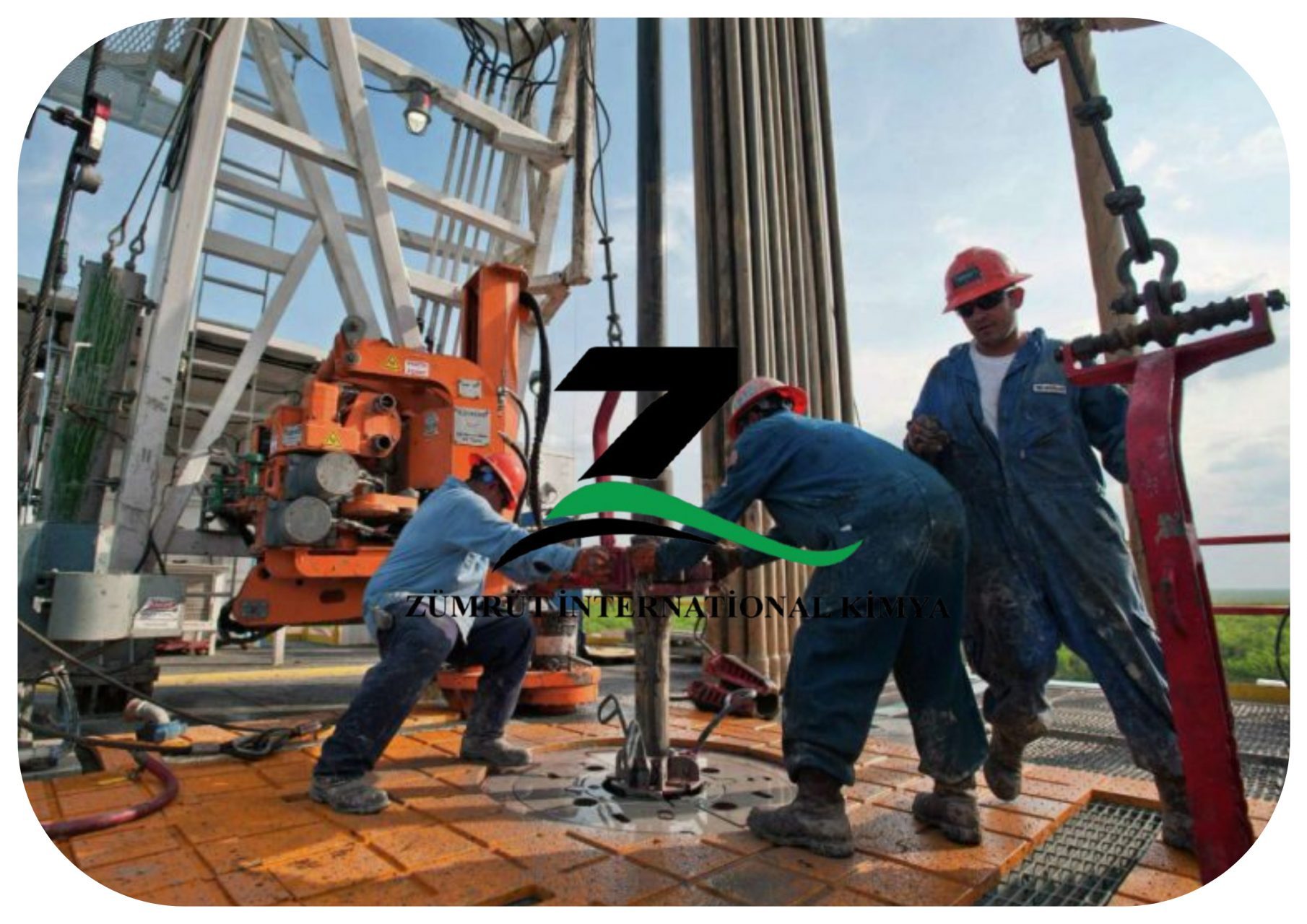
A gilsonite drilling mud additive is a natural hydrocarbon resin used to control fluid loss, stabilise shale and strengthen the wellbore. Unlike polymer and lignite filtration agents, which work chemically and degrade with temperature, gilsonite works physically — the particle softens at bottom-hole temperature and seals the formation. That difference is why it survives in HP/HT wells where the alternatives thin out.
What is in a drilling mud
Before placing any one additive, it helps to see what a mud is. Every system — water-based, oil-based or synthetic — is a base fluid carrying six functional additive classes. Each solves a different problem, and no additive substitutes for another.
| Additive class | Problem it solves | Typical materials |
|---|---|---|
| Viscosifier | Carrying cuttings; suspending solids when circulation stops | Bentonite, organophilic clay, xanthan gum |
| Weighting agent | Mud density for well control | Barite, hematite, calcium carbonate |
| Filtration control additive | Filtrate invasion and filter-cake quality | Gilsonite, causticised lignite, PAC, starch |
| Shale inhibitor | Clay hydration and wellbore instability | KCl, PHPA, amines, gilsonite |
| Thinner / deflocculant | Excess gel strength and yield point | Lignosulfonate, lignite, polyacrylate |
| Lost circulation material | Whole-mud losses into fractures and vugs | Granulated gilsonite, nutshell, mica, fibre |
Gilsonite is unusual in that it appears in three of these six rows. That is the practical argument for it: one product on the rig rather than three.
How gilsonite works as a drilling mud additive
Gilsonite — uintaite, a naturally occurring solid hydrocarbon — seals physically. The particle is hard at surface, survives mixing and circulation, and then softens at bottom-hole temperature so that it deforms into pore throats and microfractures under differential pressure and plugs them.
Two properties govern whether it works in a given well.
| Property | What it controls | How to specify it |
|---|---|---|
| Softening point | Whether the particle deforms at the depth it needs to seal | Match to bottom-hole temperature. 160 °C+ for HP/HT; too low and it flows before arriving, too high and it never deforms |
| Particle size distribution | Which pore throats and fractures it can bridge | Match to formation permeability. Fine mesh for tight rock, granulated for fractures and seepage |
The figure most purchase specifications get wrong. Buyers routinely compare gilsonite suppliers on ash and sulfur content. Neither decides field performance. Softening point and particle size distribution do, and they are the two figures that belong in the purchase order with a measured value on the certificate of analysis — not a typical-values range.
Which mud system
Gilsonite is used in all three systems, but the grade and the mechanism differ.
| System | Grade required | Treating rate | Role |
|---|---|---|---|
| Oil-based mud (OBM) | Untreated, 100–325 mesh | 5–15 lb/bbl | Disperses directly in the oil phase; primary FLC agent |
| Water-based mud (WBM) | Sulfonated or micronised | 3–8 lb/bbl | Requires treatment to disperse in water; FLC plus shale stabiliser |
| Synthetic-based mud (SBM) | Micronised, high softening point | 5–12 lb/bbl | Substitutes for far more expensive synthetic filtration additives |
The single most common specification error is ordering untreated gilsonite for a water-based system. Raw gilsonite is hydrocarbon-soluble: in a WBM it will not disperse, it will water-wet and settle, and the filtrate number will not move. Water-based systems need the sulfonated or micronised grade. If a supplier does not ask which system you are running before quoting, that is the question they should have asked.
Filtration control additives compared
Gilsonite is one of several filtrate control additives, and the right choice depends on temperature, base fluid and what else the additive has to do.
| Additive | Mechanism | System | Temperature limit | Notes |
|---|---|---|---|---|
| Gilsonite | Physical sealing; thermoplastic deformation | OBM, WBM, SBM | Set by grade; 160–220 °C available | Also stabilises shale and bridges losses. Does not degrade thermally |
| Causticised lignite | Colloidal filtration control plus deflocculation | WBM; amine-treated grades for OBM | ~177 °C (350 °F) | Leonardite treated with caustic soda. Effective and cheap, but degrades above its limit |
| PAC (polyanionic cellulose) | Polymeric film on the cake | WBM | ~149 °C (300 °F) | Good salt tolerance; raises viscosity, which is sometimes unwanted |
| Starch | Colloidal plugging of the cake | WBM, brines | ~121 °C (250 °F) | Biodegradable; needs a biocide outside saturated brine |
| Sulfonated asphalt | Physical sealing plus partial dispersion | WBM, OBM | Moderate | Chemically modified; performance varies with degree of sulfonation |
The pattern in that table is the argument for gilsonite. Every chemical additive has a temperature at which it stops working, because heat breaks the molecule. Gilsonite has no such ceiling in the same sense — its behaviour is set by the softening point you specify, so a hotter well is answered by ordering a harder grade rather than by switching chemistry.
Gilsonite and lignite together
These two are often presented as competitors. In HP/HT formulations they are frequently run together: causticised lignite handles colloidal filtration in the lower temperature range while gilsonite seals the larger pore throats and holds performance as temperature climbs. Blends of gilsonite with causticised lignite and carbon black are a recognised approach to extending HP/HT filtration control past what either material achieves alone.
Powder grades and particle size
Most drilling applications use powdered gilsonite. The mesh number is not a quality grade — it is a specification that has to match the rock.
| Grade | Particle size | Used for |
|---|---|---|
| 100 mesh | ~150 µm | Routine fluid loss control in OBM and SBM |
| 200 mesh | ~75 µm | WBM shale stabilisation and filtration control |
| 325 mesh | ~45 µm | HP/HT filtration control; tight formations |
| Granulated | 0.5–5 mm | Seepage loss, bridging, lost circulation |
| Lump | 2–50 mm | Feedstock for on-site or regional grinding |
Full physical and chemical data for each grade is on the gilsonite specification page, and the powder grades themselves on gilsonite powder.
What it does beyond fluid loss
-
Shale stabilisation
Seals microfractures and reduces pore pressure transmission into reactive shale, keeping interbedded formations intact.
-
Wellbore strengthening
Builds a continuous sealing layer along the wall, raising the pressure the open hole will tolerate.
-
Differential sticking
A thinner, firmer cake means less pipe-to-wall contact area and lower sticking risk, even at high overbalance.
-
Lost circulation
Granulated grades bridge fractures and vugs where whole mud is being lost.
-
Depleted sand sealing
Seals high-permeability depleted zones where the pressure differential is greatest.
-
Lubricity
Improves filter-cake lubricity, reducing torque and drag in high-angle and extended-reach sections.
-
HP/HT stability
Holds performance at bottom-hole temperatures that degrade starch, PAC and lignite.
-
Cementing
The same material reduces slurry density in cementing, so one supply line covers two departments.
HP/HT performance
High-pressure, high-temperature wells are where the choice of filtration additive stops being a cost question and becomes a feasibility question. Above roughly 350 °F, starch has long gone, PAC is failing and lignite is degrading. What remains has to be thermally stable in the literal sense — unchanged by the heat.
High softening point gilsonite grades perform at bottom-hole temperatures around 400 °F, and the material does not break down chemically; it simply becomes more deformable, which is the behaviour the application wants. For deepwater and HP/HT detail see gilsonite in deep water and the field case on the oil-based drilling muds page.
Specification and supply
| Item | Detail |
|---|---|
| Product | Natural gilsonite (uintaite), untreated and sulfonated grades |
| Softening point | Specified to order, 130–220 °C |
| Particle size | Lump, granulated, 100 / 200 / 325 mesh |
| Packing | 25 kg paper or PP bags; 500 / 1000 kg jumbo bags |
| Loading ports | Jebel Ali, Mersin, Iskenderun |
| Minimum order | One 20′ container |
| Documentation | Certificate of analysis per batch with measured values, SDS, third-party inspection on request |
Ask for the certificate of analysis to state measured softening point and particle size distribution with the lot number and production date. A typical-values sheet tells you what the deposit usually produces, not what is in the bags you are buying — and for a drilling additive that distinction surfaces downhole, where it is expensive.
Frequently asked questions
What is a gilsonite drilling mud additive?
A natural hydrocarbon resin (uintaite) added to drilling fluid to control fluid loss, stabilise shale, strengthen the wellbore and reduce differential sticking. It seals physically rather than chemically: the particle softens at bottom-hole temperature and deforms into pore throats and microfractures to plug them.
What is in drilling mud?
A base fluid — water, oil or a synthetic — carrying six functional additive classes: a viscosifier for hole cleaning, a weighting agent for density, a filtration control additive, a shale inhibitor, a thinner, and lost circulation material when needed. Gilsonite can serve the filtration control, shale inhibition and lost circulation roles from a single product.
How much gilsonite is added to drilling mud?
Typically 5 to 15 lb/bbl in oil-based mud, 3 to 8 lb/bbl in water-based mud, and 5 to 12 lb/bbl in synthetic-based systems. Lost circulation and bridging applications use 10 to 20 lb/bbl of granulated grade. The working figure should come from pilot testing against the actual system.
Can untreated gilsonite be used in water-based mud?
No. Raw gilsonite is hydrocarbon-soluble; in a water-based system it will not disperse, it will water-wet and settle out, and the filtrate result will not improve. Water-based muds need the sulfonated or micronised grade, which is processed specifically for water dispersion.
What is the difference between gilsonite and causticised lignite?
Lignite is leonardite treated with caustic soda; it controls filtration colloidally and also acts as a deflocculant, but it degrades thermally above roughly 350 °F. Gilsonite seals physically and does not break down chemically, so its limit is set by the softening point specified rather than by decomposition. In HP/HT formulations the two are often run together.
Which mesh size should be ordered?
100 mesh for routine OBM and SBM fluid loss control, 200 mesh for water-based shale stabilisation, 325 mesh for HP/HT and tight formations, and granulated 0.5 to 5 mm for seepage loss and bridging. The mesh number is a specification matched to formation permeability, not a quality grade.
What temperature can gilsonite withstand in drilling fluid?
High softening point grades perform at bottom-hole temperatures around 400 °F. Because the material does not degrade chemically with heat, a hotter well is answered by specifying a higher softening point grade rather than by changing to a different additive chemistry.
Does gilsonite replace barite or bentonite?
No. Barite is a weighting agent providing density and bentonite is a viscosifier providing gel strength; gilsonite does neither. It replaces or supplements the filtration control additive, and can also cover shale inhibition and lost circulation, but it is not a substitute for the weighting or viscosifying components.
What specification figures matter when buying?
Softening point and particle size distribution, stated as measured values on the batch certificate of analysis. Ash and sulfur content are frequently compared between suppliers but neither governs field performance in a drilling fluid.
Is gilsonite environmentally acceptable offshore?
It is a naturally occurring, non-toxic, non-carcinogenic and non-mutagenic mineral requiring only standard PPE for handling and disposal. It is actively preferred over synthetic alternatives in regions where discharge and exposure limits are tightest.
Related pages
By mud system: oil-based drilling muds (OBM), gilsonite in water-based muds (WBM) and how gilsonite improves WBM performance.
By function: drilling fluid loss control, gilsonite FLC, gilsonite in deep water and gilsonite in cementing.
Material and other additives: gilsonite specification, gilsonite powder, natural bitumen, bentonite drilling mud, barite powder and sulfonated asphalt.
Order gilsonite drilling mud additive
Tell us the mud system, the bottom-hole temperature and the filtrate specification you are working to. We will recommend the softening point and mesh size the well actually requires, and confirm the measured values the certificate of analysis will carry before you commit. Samples are available for pilot testing.
Dubai +971 4 566 4998 · Ankara +90 507 246 9520

[…] pages: Gilsonite Drilling Mud Additive · Gilsonite in WBM · Gilsonite in Cementing · Bentonite Drilling Mud · […]