
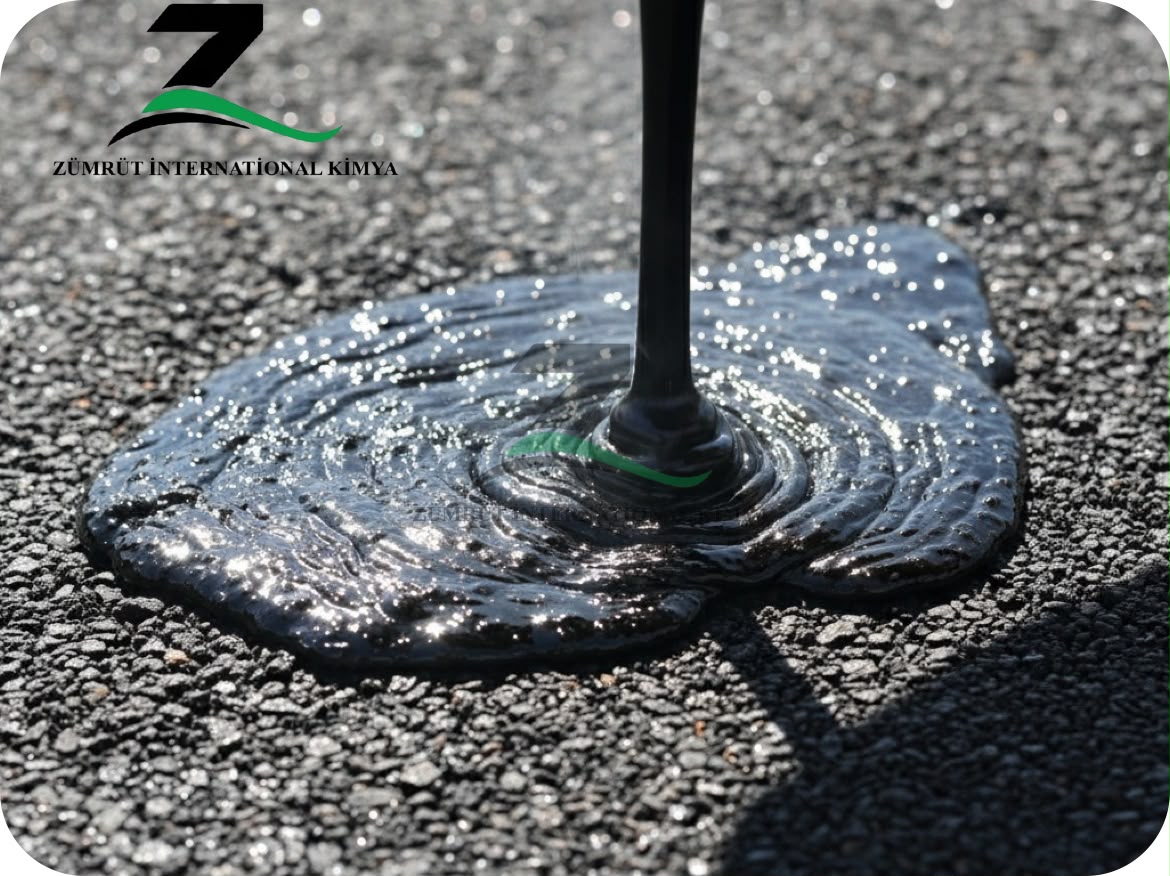
The bitumen vs asphalt question has two separate answers, and confusing them is why the argument never ends. Technically, asphalt is made from bitumen — bitumen is the black binder, asphalt is the finished mix of that binder with aggregate. One is an ingredient of the other, not a rival to it. Regionally, American English calls the binder itself “asphalt”, so a US engineer saying asphalt often means exactly what a British engineer calls bitumen. Both usages are correct in their own market. Neither is a mistake. But on a purchase order, the ambiguity costs money.
This guide settles the bitumen vs asphalt question properly: the technical relationship between the two, why the terminology diverged between Britain and America, where tar fits and why it disappeared, how the materials differ in production, cost and testing, and what to write on a contract so both sides mean the same thing.
Bitumen vs asphalt: how the two relate
Strip out the regional vocabulary and the engineering answer is simple. Asphalt contains bitumen. They are not two competing products.
| Bitumen | Asphalt (the mix) | |
|---|---|---|
| What it is | A viscous hydrocarbon binder | A composite of aggregate bound with bitumen |
| Source | Residue from vacuum distillation of crude oil | Manufactured at an asphalt plant by mixing |
| Composition | Asphaltenes, resins, aromatics, saturates | Roughly 90–95% aggregate, 4–6% bitumen, plus filler and air voids |
| Appearance | Black, sticky, semi-solid at ambient | Grey-black granular material |
| Sold as | Drums, bulk tankers, bitutainers | Loose by the tonne, delivered hot from a local plant |
| Traded internationally? | Yes — shipped worldwide | No — must be laid hot, so it is always local |
| Graded by | Penetration, viscosity or performance | Mix design, gradation, binder content |
| Shelf life | About 24 months in sealed drums | Hours. It must be laid before it cools |
The last two rows are the practical heart of it. You can buy bitumen from another continent. You cannot buy asphalt from another continent. Asphalt mix leaves the plant at around 160 °C and has to be laid and compacted before it drops below roughly 100 °C, which puts a hard limit of an hour or two on haulage. That is why every asphalt plant serves a local radius, and why international suppliers like us ship binder rather than mix.
The analogy that settles it. Bitumen is to asphalt what cement is to concrete. Cement is the binder; concrete is the finished material made by mixing cement with aggregate and water. Nobody asks whether cement or concrete is better, because the question makes no sense — one goes into the other. The bitumen vs asphalt question is the same, and it only persists because in one large market, the same word does both jobs.
Why the terminology split: UK vs US English
This is the actual source of nearly every bitumen vs asphalt argument, and it is a vocabulary problem rather than a technical one.
| The material | British / Commonwealth term | American term |
|---|---|---|
| The black binder | Bitumen | Asphalt, asphalt cement, or AC |
| The finished road mix | Asphalt, asphalt concrete, macadam | Asphalt, hot mix asphalt, HMA |
| The naturally occurring solid | Natural asphalt, natural bitumen | Natural asphalt, gilsonite, asphaltite |
| The paved surface | Tarmac (colloquial), blacktop | Blacktop, pavement |
Which markets use which
Bitumen is standard in the UK, Ireland, Australia, New Zealand, South Africa, India, the Gulf, most of Africa and most of Asia. If a tender is written in British-influenced English, bitumen means the binder.
Asphalt for the binder is standard in the United States and Canada, and in Latin American markets that follow US practice. The Asphalt Institute, the industry’s US body, uses “asphalt” throughout to mean the binder — which is why American technical literature reads oddly to a British engineer.
Some markets use their own words entirely. Brazil says CAP, from cimento asfáltico de petróleo. Spanish-speaking Latin America says asfalto. Francophone Africa says bitume. Our bitumen grade equivalence chart maps the grading systems these markets use against each other.
The practical rule for a purchase order. Never write “asphalt” alone on a contract for an international shipment. Write the grade and the standard: “Penetration bitumen 60/70 to EN 12591” or “Asphalt cement AC-20 to ASTM D3381” or “CAP 50/70 to ANP specification”. Grade plus standard is unambiguous in every market on earth. The word by itself is not.
Where tar fits, and why it is gone
Tar is the third term in this confusion and the one where getting it wrong actually matters, because tar and bitumen are chemically different materials with very different health profiles.
| Bitumen | Coal tar | |
|---|---|---|
| Made from | Crude oil, by vacuum distillation | Coal, by destructive distillation in coke ovens |
| Chemistry | Mostly aliphatic and naphthenic hydrocarbons | Highly aromatic, rich in polycyclic aromatic hydrocarbons |
| Health profile | Managed with normal industrial hygiene | Classified as carcinogenic to humans |
| Odour | Faint, oily | Sharp, distinctive, phenolic |
| Current use in roads | Universal | Banned or heavily restricted in most countries |
| Solubility | Soluble in trichloroethylene, ASTM D2042 | Different solvent behaviour; used to distinguish the two |
Coal tar was widely used for road surfacing into the mid-twentieth century, which is where “tarmac” and “tarred road” come from. The word survived in everyday speech long after the material was replaced. When someone today says a road is “tarred”, they almost certainly mean it was surfaced with bitumen.
The health evidence changed practice. The International Agency for Research on Cancer classifies coal tar as carcinogenic to humans, while occupational exposure to bitumen sits in a lower, less certain category. Coal tar road use has been phased out across Europe, North America and most other regulated markets. Coal tar pitch still has industrial applications — aluminium smelting anodes, some roofing products — but not paving.
If a specification you have been sent names tar for a road surface, it is almost certainly an outdated document. Query it before pricing.
Types of asphalt mix
Once you know asphalt is the mix rather than the binder, the next question is which mix. These are the categories a contractor chooses between, and each needs a different binder from us.
| Mix type | How it is made | Where it is used | Binder needed |
|---|---|---|---|
| Hot mix asphalt (HMA) | Aggregate and binder mixed at 150–180 °C | The standard for highways, urban roads, airports | Penetration grade or PG grade |
| Warm mix asphalt (WMA) | Additives allow mixing 20–40 °C cooler | Where fuel use, emissions or haul distance matter | Same grades plus a WMA additive |
| Cold mix asphalt | Mixed at ambient temperature | Patching, low-volume roads, remote sites | Cutback or emulsion |
| Stone mastic asphalt (SMA) | Gap-graded, stone-on-stone skeleton with mastic | Heavy traffic, high rut resistance required | PMB, usually with fibre |
| Porous asphalt | Open graded to let water drain through | Noise reduction, spray reduction, drainage | PMB — the open structure ages faster |
| Mastic asphalt | Voidless, poured and floated rather than rolled | Bridge decks, roofing, flooring, waterproofing | Hard or oxidized grades |
| Recycled asphalt (RAP) | Milled old pavement reprocessed into new mix | Increasingly standard worldwide | Softer virgin grade to offset aged binder |
How bitumen is made, and how asphalt is made from it
Bitumen production
Crude oil goes through atmospheric distillation, which takes off the light fractions — gases, naphtha, kerosene, gas oil. The heavy residue then goes to a vacuum distillation unit, where reduced pressure allows further separation without cracking the molecules. What comes off the bottom is bitumen.
From there, the grade is set by how it is finished. Straight-run material is blended to a target penetration or viscosity. Oxidized grades are made by blowing air through hot bitumen, which raises the softening point and hardens the product for industrial and waterproofing use. Polymer modified grades have SBS or other polymers blended in under high shear.
Not all crude produces good bitumen. Naphthenic and heavy sour crudes give better yields and better binder properties than light sweet crudes. This is why bitumen availability is tied to which refineries are running which crude slate, and why supply tightens when refiners shift to lighter feed.
Asphalt production
An asphalt plant heats and dries aggregate, then combines it with hot bitumen and mineral filler in proportions set by a mix design. The mix is discharged into insulated trucks and taken directly to the paving site, where it is spread by a paver and compacted by rollers while still hot.
The mix design is the engineering. Marshall or Superpave methods determine the gradation and the optimum binder content — typically 4.5 to 5.5 percent by weight. Too little binder and the mix ravels; too much and it rutts and bleeds. That percentage is why a single tonne of bitumen produces roughly twenty tonnes of finished asphalt.
Cost: why the two are not comparable
Buyers sometimes try to compare a bitumen price against an asphalt price and conclude one is far more expensive. They are measuring different things.
| Bitumen | Asphalt mix | |
|---|---|---|
| Priced per | Metric tonne of binder | Metric tonne of finished mix |
| Price driven by | Crude, refinery output, freight, packing | Binder cost, local aggregate, plant fuel, haulage |
| Binder share of cost | 100% | Typically the single largest input despite being 5% by weight |
| Transport | Shipped worldwide | Local only, hot haulage under two hours |
| Who sells it | Refiners, traders, exporters | Local asphalt plants and contractors |
The relationship worth remembering: one tonne of bitumen makes roughly twenty tonnes of asphalt. So a rise of USD 100 per tonne in bitumen adds about USD 5 per tonne to the mix — small on the surface, but on a large paving programme it is a material figure, which is why contractors watch binder prices closely. Indicative levels are on our bitumen price page.
Testing: different materials, different tests
Another place the bitumen vs asphalt distinction becomes concrete. The two are tested for entirely different properties.
| Tested on bitumen | Method | Tested on asphalt mix | Method |
|---|---|---|---|
| Penetration @25 °C | ASTM D5 | Marshall stability and flow | ASTM D6927 |
| Softening point | ASTM D36 | Air void content | ASTM D3203 |
| Ductility | ASTM D113 | Bulk specific gravity | ASTM D2726 |
| Viscosity @60 °C | ASTM D2171 | Binder content extraction | ASTM D2172 |
| Flash point | ASTM D92 | Aggregate gradation | ASTM C136 |
| Solubility | ASTM D2042 | Moisture susceptibility | AASHTO T283 |
| Ageing (RTFOT / PAV) | ASTM D2872 / D6521 | Rutting, wheel tracking | EN 12697-22 |
A certificate of analysis for bitumen shows the left-hand column. If a supplier hands you a document with Marshall stability figures on it, they are describing a mix, not a binder. Test methods are maintained by ASTM International and, in Europe, under the EN standards.
Natural asphalt: the third category
Both refined bitumen and manufactured asphalt are industrial products. There is also naturally occurring material, and it confuses the vocabulary further.
| Material | What it is | Use | HS code |
|---|---|---|---|
| Gilsonite (uintaite) | Solid natural asphaltite, mined in veins | Drilling fluids, ink, paint, foundry, asphalt modification | 2714.90 |
| Natural asphalt / rock asphalt | Bitumen-impregnated limestone or sandstone | Historically paving; now specialist applications | 2714.90 |
| Trinidad Lake asphalt | Natural asphalt lake deposit | Premium paving additive, heritage restoration | 2714.90 |
| Tar sands / oil sands | Sand saturated with heavy bitumen | Feedstock for synthetic crude, not direct paving | 2714.10 |
| Refined petroleum bitumen | Vacuum distillation residue | Paving, roofing, industrial | 2713.20 |
Note the HS codes differ. Natural and petroleum bitumen sit under separate headings, which matters for customs classification and duty. Gilsonite is not a substitute for paving bitumen — it is a hard, high-softening-point additive used to modify a binder or a compound, not to replace one.
What this means for your purchase order
Everything above reduces to a few practical rules for anyone buying across borders.
- Name the grade and the standard, not the material. “Bitumen 60/70 to EN 12591” leaves no room for interpretation. “Asphalt” alone does.
- Confirm whether the buyer wants binder or mix. An enquiry for “500 tonnes of asphalt” from a US buyer usually means binder. From a UK contractor it usually means mix — and mix cannot be shipped, so the enquiry needs redirecting before anyone wastes a week.
- Check the certificate matches the material. Penetration and softening point describe a binder. Marshall stability describes a mix.
- Watch the HS code. Petroleum bitumen is 2713.20; natural bitumen and gilsonite are 2714.90; emulsion and cutback are 2715.00. Misclassification is a clearance problem and sometimes a penalty. The full documentation picture is in our bitumen export documentation guide.
- If a tender says tar, query it. It is almost certainly an outdated document rather than a genuine requirement.
What ZUMRUT supplies
We supply the binder, not the finished mix — because mix cannot travel. Our range covers penetration grades to ASTM D946 and EN 12591, viscosity grades to IS 73, performance grades to AASHTO M320, AC grades to ASTM D3381, Australian class grades to AS 2008, oxidized grades for waterproofing and industry, emulsion, cutback, polymer modified binder, membrane and gilsonite.
Every shipment carries a batch certificate of analysis stating the lot number, the production date and each test with its measured result against the standard your contract names. Loading is from Jebel Ali, Mersin and Iskenderun on FOB, CFR or CIF terms, minimum 100 MT.
Frequently asked questions about bitumen vs asphalt
What is the difference between bitumen and asphalt?
Bitumen is the black viscous binder produced from crude oil. Asphalt is the finished road material made by mixing that binder with aggregate, typically 4 to 6 percent bitumen and 90 to 95 percent stone. Bitumen is an ingredient; asphalt is the recipe. The complication is that American English uses “asphalt” for the binder as well, so the same word does both jobs in one large market.
Is asphalt made from bitumen?
Yes. Asphalt mix is manufactured by combining heated aggregate with hot bitumen and mineral filler at an asphalt plant. The bitumen content is typically 4 to 6 percent by weight, set by the mix design. That is why the two are not really comparable materials — one is a component of the other, in the same way cement is a component of concrete.
Are bitumen and asphalt the same thing?
Not technically, though in American usage the words overlap. In British, Australian, Indian and most international practice, bitumen means the binder and asphalt means the mix. In the United States, “asphalt” or “asphalt cement” commonly refers to the binder itself. Both usages are correct in their own market, which is why contracts should name the grade and standard rather than the material.
Is tar the same as bitumen?
No, and the difference matters. Bitumen comes from crude oil by vacuum distillation. Coal tar comes from coal by destructive distillation and is much more aromatic, rich in polycyclic aromatic hydrocarbons, and classified as carcinogenic to humans. Coal tar was used for roads into the mid-twentieth century, which is where the word “tarmac” comes from, but it has been phased out of paving in most regulated markets.
Why do Americans call bitumen asphalt?
Historical vocabulary divergence rather than any technical reason. American industry adopted “asphalt” for the refined binder and “hot mix asphalt” for the mix, so the same root word covers both. British and Commonwealth practice kept “bitumen” for the binder and reserved “asphalt” for the mix. Neither is wrong; they are different conventions, and international contracts should specify grade and standard to avoid the ambiguity.
How much bitumen is in asphalt?
Typically 4 to 6 percent by weight of the total mix, with the exact figure set by the Marshall or Superpave mix design. The remainder is aggregate and mineral filler. One tonne of bitumen therefore produces roughly twenty tonnes of finished asphalt, which is why a change in binder price has a much smaller per-tonne effect on the mix.
Can asphalt be imported from another country?
Finished asphalt mix cannot be practically imported. It leaves the plant at around 160 degrees Celsius and must be laid and compacted before it cools below roughly 100 degrees, which limits haulage to an hour or two. That is why asphalt plants serve a local radius and international suppliers ship bitumen binder, which stores for around two years in sealed drums.
Which is stronger, bitumen or asphalt?
The question does not compare like with like. Bitumen on its own has almost no load-bearing capacity; it is a flexible adhesive. Structural strength in a pavement comes from the aggregate skeleton, with the bitumen holding it together and keeping water out. Asking which is stronger is like asking whether cement or concrete is stronger.
What is the difference between asphalt and blacktop?
Blacktop is a colloquial North American term for an asphalt-surfaced road or car park. It is not a technical designation and does not appear in specifications. Similarly, “tarmac” is a British colloquialism derived from tar macadam, a coal tar product no longer used for roads.
Is gilsonite the same as bitumen?
No. Gilsonite, also called uintaite, is a solid natural asphaltite mined from underground veins. It has a much higher softening point than refined bitumen and is used as an additive in drilling fluids, ink, paint, foundry sand and asphalt modification rather than as a paving binder. It also falls under a different HS heading, 2714.90 against 2713.20 for petroleum bitumen.
What should I write on a purchase order?
The grade and the standard together, never the material alone. “Penetration bitumen 60/70 to EN 12591” or “Asphalt cement AC-20 to ASTM D3381” or “VG-30 to IS 73” are unambiguous in every market. “Asphalt” or “bitumen” on its own is not, and the resulting confusion is the most common cause of a mismatched first shipment.
Do you supply asphalt or bitumen?
Bitumen binder, in every grading system. Finished asphalt mix has to be produced locally because it cannot survive transport. If you need mix, you need a local asphalt plant; if you need binder for that plant, that is what we ship. Minimum order is 100 MT, loading from Jebel Ali, Mersin or Iskenderun.
What is the HS code for bitumen and asphalt?
Petroleum bitumen falls under HS 2713.20. Natural bitumen and asphalt, including gilsonite, fall under 2714.90. Bituminous mixtures such as emulsion and cutback fall under 2715.00, and bituminous membrane in rolls under 6807.10. National tariffs add further digits, so confirm the full code with your customs broker.
Reference sources
-
US terminology and practice
The Asphalt Institute publishes American industry guidance, using “asphalt” throughout for the binder.
-
European practice
Eurobitume covers European bitumen handling, health and safety guidance.
-
Test methods
Binder and mix test standards are maintained by ASTM International and under the EN series.
-
Health classification
Coal tar and bitumen exposure classifications are published by the International Agency for Research on Cancer.
Related technical guides
For cross-referencing between grading systems, see the bitumen grade equivalence chart. For how long binder stays on specification, see the bitumen shelf life and storage guide. For the paperwork side of an international shipment, see the bitumen export documentation guide. Country-level supply detail is in the global bitumen supply guide.
Tell us the grade, not just the material
Send us the grade and standard your contract names, the quantity, the packing and the discharge port. We will confirm what the certificate of analysis will state, quote FOB, CFR or CIF, and tell you honestly if a different grade suits the application better than the one specified.
Dubai +971 4 566 4998 · Ankara +90 507 246 9520
