
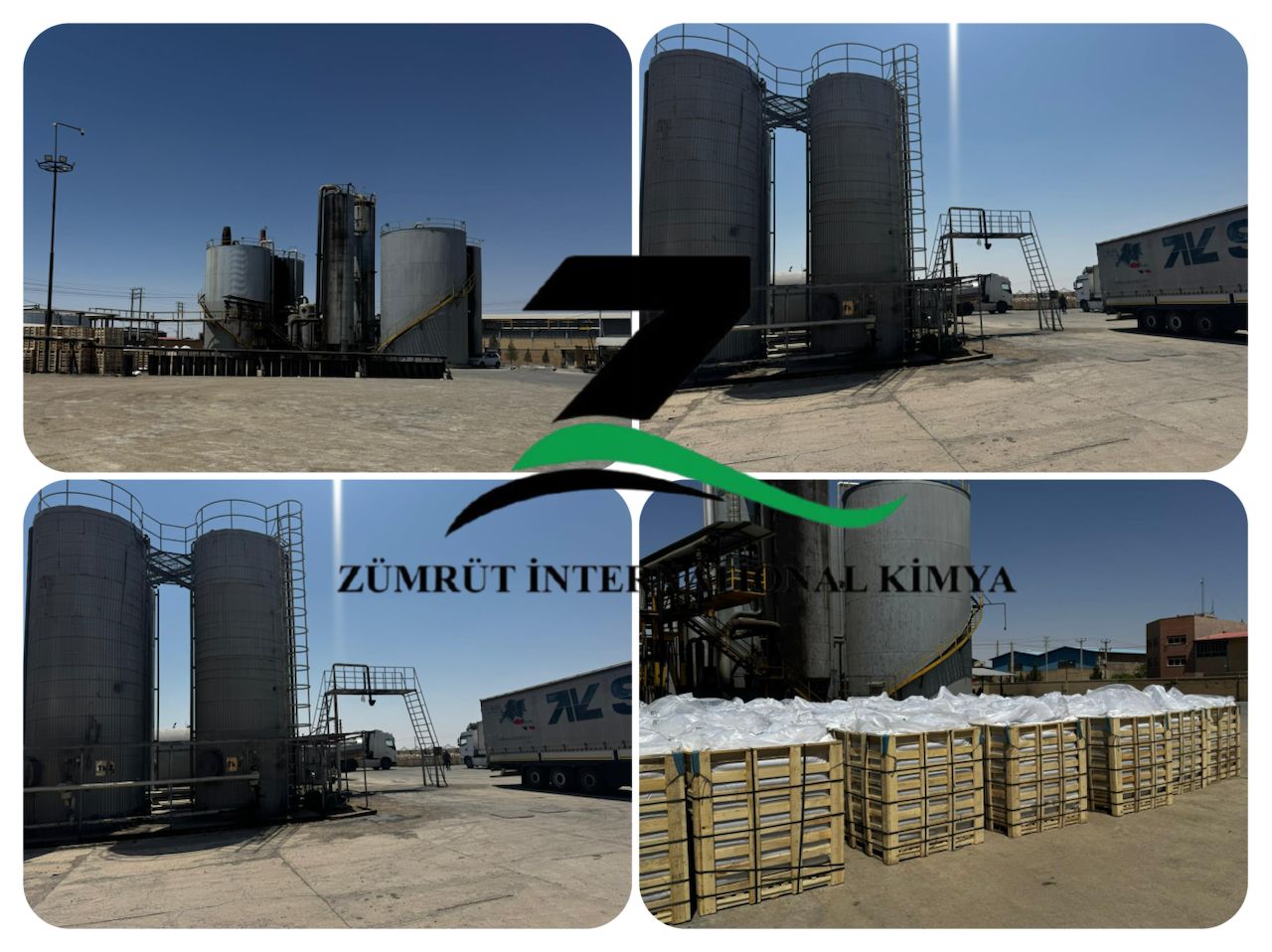
Bitumen shelf life is shorter than most buyers assume, and it depends far more on how the material is stored than on how old it is. Penetration grade bitumen in sealed drums holds its specification for roughly two years. The same bitumen sitting hot in a tank at 180 °C can drift out of specification in under a week. Bitumen emulsion can be finished in a month. The material is the same family of product — what changes is temperature, air contact and time.
This guide covers bitumen shelf life product by product, the storage and handling temperatures for each grade, what goes wrong in drum yards and tank farms, and how to test material that has been sitting longer than planned. It is written from the shipping side — we load drums at Jebel Ali, Mersin and Bandar Abbas and see what arrives at the other end after 30 to 50 days at sea.
Bitumen shelf life by product and packing
There is no single bitumen shelf life figure that covers the whole product family. A hard oxidized grade in a kraft bag and a cationic emulsion in a drum are separated by more than an order of magnitude. The table below is the working set of bitumen shelf life figures we use when planning production dates against sailing schedules.
| Product | Packing | Typical shelf life | What limits it |
|---|---|---|---|
| Penetration bitumen | Sealed 180 / 200 kg steel drum | 24 months | Slow oxidation through seams and bung; water ingress if bungs loosen |
| Penetration bitumen | Jumbo bag, 300 kg | 12–18 months | Bag degrades under UV; blocks deform and fuse in stacked heat |
| Penetration bitumen | Bulk, held hot in tank | 3–5 days | Rapid oxidative hardening; penetration falls, softening point rises |
| Oxidized bitumen | Kraft bag, carton, drum | 24–36 months | Already air-blown, so little left to oxidize; the risk is blocks fusing together |
| Cutback bitumen | Sealed drum | 6–12 months | Solvent evaporation. Viscosity climbs and the cutback stops spraying correctly |
| Bitumen emulsion | Drum, IBC, tank | 1–3 months | Settlement, coalescence and irreversible breaking. Freezing destroys it outright |
| Polymer modified (PMB) | Drum, cold | 6 months | Polymer phase separation; storage stability of the blend |
| Polymer modified (PMB) | Bulk, held hot | 3–5 days | Polymer separates and floats within hours if agitation stops |
| Gilsonite powder | 25 kg bag, jumbo bag | Indefinite | Moisture caking only. The mineral itself does not age |
| Membrane rolls | Palletised rolls | 12 months | UV exposure, roll blocking, edge deformation from stacking |
These bitumen shelf life figures assume sealed packing, no water ingress and ambient storage out of direct sun. A batch certificate of analysis stating the production date is issued before every shipment.
Two things follow from that table. First, the production date matters far more than the shipment date — a drum produced in March and shipped in November has already used a third of its bitumen shelf life before it leaves the port. Ask for the production date on the certificate of analysis, not just the test date. Second, expired is not the same as unusable. Bitumen does not spoil the way food does; it drifts. A 24-month drum at 30 months is a retest question, not automatically a rejection.
Why bitumen ages: the four mechanisms behind bitumen shelf life
Understanding the mechanism tells you which storage conditions actually shorten bitumen shelf life and which precautions are theatre.
1. Oxidative hardening — the one that governs everything
Oxygen reacts with the maltene fraction and converts it toward asphaltenes. The binder becomes harder and more brittle: penetration falls, softening point rises, ductility drops. The rate depends on temperature and on how much surface area is exposed to air. A working rule from the refining and paving literature is that the reaction rate roughly doubles for every 10 °C increase. That single fact explains the whole spread in bitumen shelf life — why a sealed cold drum lasts two years and an open hot tank lasts days.
2. Loss of volatiles
Straight-run bitumen contains few light ends, so this matters little for penetration grades. It dominates cutback bitumen shelf life, where the kerosene or gasoline cutter is the whole point of the product. Once the solvent leaves, viscosity climbs and the material will no longer spray through a distributor bar at the design temperature.
3. Steric hardening
At ambient temperature, molecules slowly reorganise into a more ordered structure and the binder stiffens without any chemical change. This one is largely reversible — reheating and stirring recovers most of it. It is why a drum that seems unusually stiff after a long cold winter often tests normal once it is properly melted and homogenised, and why apparent stiffness alone is a poor guide to bitumen shelf life.
4. Water contamination
Not ageing, but the most dangerous storage failure. Water that collects on a drum top and works past a loosened bung, or condensation in a poorly vented tank, sits at the bottom under hot bitumen. When it flashes to steam the volume expansion is violent.
Boil-over hazard. If bitumen foams, spits or crackles as it is heated, water is present. Stop heating, do not add more heat to “drive it off”, and let a competent person assess the vessel. A tank boil-over throws hot binder several metres and is the most common serious injury in bitumen storage.
Storage and handling temperatures that protect bitumen shelf life
These are working ranges. The producer’s data sheet and the batch certificate of analysis always take precedence, and any figure that conflicts with your project specification loses.
| Product | Safe holding | Pumping | Mixing / application | Maximum |
|---|---|---|---|---|
| Bitumen 40/50 | 140–160 °C | 145–165 °C | 155–175 °C | 190 °C |
| Bitumen 60/70 | 130–155 °C | 140–160 °C | 150–170 °C | 185 °C |
| Bitumen 80/100 | 125–145 °C | 135–155 °C | 145–165 °C | 175 °C |
| Oxidized 90/40, 85/25 | Not held hot | 180–200 °C | 190–210 °C | 230 °C |
| Oxidized 115/15, 105/35 | Not held hot | 190–215 °C | 200–220 °C | 230 °C |
| Cutback RC-70 / MC-70 | Ambient | 50–70 °C | Spray at 50–80 °C | 80 °C |
| Cutback RC-250 / MC-250 | Ambient | 70–95 °C | Spray at 75–105 °C | 105 °C |
| Cutback RC-800 / MC-800 | Ambient | 85–110 °C | Spray at 90–120 °C | 120 °C |
| Cutback MC-3000 / SC-3000 | Ambient | 95–125 °C | Spray at 105–135 °C | 135 °C |
| Bitumen emulsion | 10–60 °C | Gentle recirculation, 20–70 °C | Spray at 50–70 °C | 85 °C, never below 0 |
| PMB / CRMB | 160–180 °C with agitation | 165–185 °C | 170–185 °C | 190 °C |
The most costly mistake in this table is not the maximum — most crews respect that. It is the holding temperature, and it is where bitumen shelf life is quietly destroyed. Keeping a tank of 60/70 at 175 °C over a weekend because the burner control is coarse will cost more penetration than the whole sea voyage did.
Long holds: drop the temperature
If bulk material has to sit for more than a few days, take it down to a holding temperature of roughly 110–125 °C, keep it circulating, and bring it back up to working temperature shortly before use. It stays pumpable and the oxidation clock runs far slower. Log the hours at temperature — after a cumulative week above 160 °C, a penetration retest before use is a reasonable precaution.
Storing bitumen drums correctly
Most bitumen we ship travels in 180 kg or 200 kg new sealed steel drums, and most bitumen shelf life problems we hear about are drum-yard failures rather than product failures.
- Store upright, bungs up. Drums on their side let water pool against the seam and the bung gasket. This is the number one route for water ingress.
- Keep drums off the ground. Pallets or timber dunnage. Direct contact with concrete or soil corrodes the base ring and traps moisture underneath.
- Limit stacking to two tiers palletised. In hot climates the bottom tier softens and drums deform; deformed drums split at the chime.
- Cover or shade. A steel drum in direct sun in the Gulf or the Sahel reaches 70 °C or more on the shell — not enough to damage the binder quickly, but enough to stress seams and drive an expansion cycle that loosens bungs.
- Drain the yard. Standing water around the base of a drum stack is a slow leak into the product.
- Rotate first in, first out by batch. Keep the batch number visible and the COA filed against it. Mixed batches on one pallet make later retesting meaningless.
- Inspect on arrival. Check bung gaskets and chime seams on receipt. Damage found on delivery is a claim; damage found in month eleven is your problem.
- Do not decant into open containers. Every transfer to an open vessel starts a fresh oxidation surface.
Getting bitumen out of a drum after long storage
Cutting the drum and using a drum melter or a hot-oil jacketed unit is the correct method. Direct flame on a drum shell is how drums are burned through and how the contents are locally coked. Where material has been stored close to the end of its bitumen shelf life, melt one drum, take a sample from the homogenised melt, and test it before committing the batch.
Bulk tank storage
For buyers with a tank farm or an asphalt plant, storage discipline is what preserves both the specification you paid for and the remaining bitumen shelf life of the cargo.
- Heat indirectly. Hot oil or steam coils, not direct fire. Coil skin temperature should stay under about 200 °C — binder in immediate contact with a hot coil hardens far faster than the bulk average suggests.
- Circulate, do not just heat. Without circulation the top of the tank oxidises and skins while the bottom stays cool. Circulation also prevents a false reading at the temperature sensor.
- Keep coils covered. An exposed coil in the vapour space cokes bitumen onto itself and creates a fire risk in the headspace.
- Control the vapour space. The smaller the exposed surface and the less air movement over it, the slower the surface hardens. Keeping the tank reasonably full is usually enough.
- Never introduce water. Check that steam coils are not leaking, keep vents clear so condensation drains outward, and confirm any tank is dry before first filling.
- Do not mix grades in one tank. The blend is neither grade and no certificate covers it.
- Keep a temperature log. Hours at temperature is the single variable that predicts how much bitumen shelf life a tank has consumed.
Bitumen emulsion: the shortest bitumen shelf life on the list
Emulsion is bitumen droplets suspended in water with an emulsifier. It is not a stable chemical state — it is designed to break. Everything about storing it is about postponing that.
- Never let it freeze. Below 0 °C the emulsion breaks irreversibly. There is no recovery. In continental winters this is the most common total loss.
- Do not exceed about 85 °C. Water boils out, the emulsion breaks, and you are left with a drum of set bitumen.
- Settlement is normal; separation is not. Denser droplets sink over weeks and a gentle roll or slow recirculation restores it. Hard lumps that will not redisperse mean the emulsion has broken.
- Never agitate with compressed air. Air shears the droplets and accelerates breaking. Recirculate with a pump at low velocity instead.
- Watch the metals. Cationic emulsions attack aluminium, copper, brass and galvanised surfaces. Use lined steel, stainless or suitable plastics for tanks, pumps and fittings.
- Never mix cationic and anionic. Opposite charges coagulate on contact. Flush lines and tanks completely when changing type.
- Fill drums nearly full. A large headspace lets a skin form on the surface.
Two standard tests tell you whether an emulsion is still inside its usable bitumen shelf life: ASTM D6930 (storage stability, the 1-day and 5-day settlement test) and ASTM D6933 (sieve test, which catches oversize particles from partial breaking). If the sieve test fails, the material will block spray nozzles regardless of how it looks in the drum.
How to tell whether stored bitumen is still on specification
Calendar age is a planning tool, not a verdict. These are the observations that tell you whether the bitumen shelf life of a particular batch has actually run out.
| What you observe | Likely cause | Test to run | Practical decision |
|---|---|---|---|
| Penetration 15–20% below the COA value | Oxidative hardening in storage | ASTM D5 | May now fall in the next harder grade. Reclassify, or use where the harder grade is acceptable |
| Softening point risen by more than 5 °C | Same | ASTM D36 | Confirms hardening. Read together with penetration before any decision |
| Ductility well below the COA figure | Advanced ageing | ASTM D113 | The strongest single indicator that the binder has aged badly. Reject for paving |
| Hard skin or crust on the surface | Air exposure at the surface only | Visual, then test below the skin | Skim and test. Bulk material underneath is often fine |
| Foaming or spitting on heating | Water contamination | Stop and assess | Do not continue heating. Serious boil-over risk |
| Emulsion: soft sludge at the bottom | Normal settlement | ASTM D6930 | Recirculate gently and retest. Usually recoverable |
| Emulsion: lumps that will not redisperse | Partial or full breaking | ASTM D6933 sieve | Reject. It will block spray equipment |
| Cutback noticeably thicker, sprays poorly | Solvent loss through the seal | ASTM D2170 | Reject for spray application. May be usable in mix designs that tolerate it |
| Oxidized blocks fused into one mass | Heat and stacking pressure | ASTM D36 after melting | Physical problem, not a quality problem. Melt and test |
A simple retest policy
Test at 12 months from the production date, then every 6 months after that. Two tests — penetration and softening point — cost very little and settle the bitumen shelf life question for that batch. Run them against the batch certificate of analysis, not against the grade specification, so you can see how far the material has moved rather than only whether it still passes.
Bitumen shelf life during shipping and at destination
A sea leg from Jebel Ali, Mersin or Bandar Abbas to West Africa, South Asia or Latin America runs 20 to 50 days. Inside a steel container crossing the Red Sea or the equator, air temperature routinely reaches 60–70 °C. That is well below any temperature that meaningfully shortens bitumen shelf life, so the chemistry is not the concern.
The physical behaviour is. Warm bitumen in drums softens, the load settles, and poorly dunnaged stacks shift. Drums that arrive dented at the chime are drums that will leak in the yard six months later. What prevents this is correct loading — full floor coverage, no voids, proper lashing, and a loading photo set taken at the time of stuffing. A third-party inspection at loading gives you that record.
At destination the clock keeps running while the cargo sits in a customs yard. If clearance is slow, the cargo is still consuming its bitumen shelf life and still exposed to sun and rain. That is one reason to fix documentation before the vessel arrives rather than after.
Bitumen shelf life by application
What matters is not the calendar age but whether the property your application depends on has moved. Some uses are unforgiving about bitumen shelf life; others barely notice.
| Application | Sensitivity to ageing | Practical guidance |
|---|---|---|
| Hot mix asphalt, national road contracts | High | Use within 12–18 months of production. Retest before use if older, and keep the COA with the batch |
| Surface dressing and chip seal | High | Fresh material. Aged binder loses adhesion and the seal ravels |
| Prime and tack coats | Very high | Emulsion within 3 months, cutback within 6–12. Retest viscosity if in doubt |
| Waterproofing membranes and roofing | Moderate | Oxidized grades tolerate long storage. Physical condition matters more than test drift |
| Pipe coating and industrial mastic | Moderate | Softening point is the governing property. Retest before a coating run |
| Cold patch and maintenance stockpiles | Low | Wide tolerance. Older material is usually still fit for purpose |
What we do on the supply side
Bitumen shelf life is a shared responsibility and the exporter owns the first half of it. On every shipment we issue a batch certificate of analysis with the production date stated, load into new sealed drums rather than reconditioned ones, and accept third-party inspection at loading by SGS, Bureau Veritas or the surveyor named in your contract. If a cargo has to wait between production and sailing, it waits cold and under cover, not hot in a tank.
If you are buying a grade you will hold for a long time — a maintenance stockpile, a strategic reserve, a slow-drawdown contract — say so at the enquiry stage. It changes the sensible packing choice and it changes which grade we would recommend.
Frequently asked questions about bitumen shelf life
These are the bitumen shelf life questions we are asked most often when a buyer is planning storage or has found older stock in the yard.
Does bitumen expire?
Not in the sense that it becomes waste. It drifts out of specification. Bitumen shelf life for penetration grades in sealed drums is typically around 24 months; beyond that the material usually still functions but may test into a harder grade. The exception is bitumen emulsion, which genuinely can be destroyed — by freezing or by breaking — and then has no use at all.
How long can bitumen be stored hot in a tank?
Three to five days at normal working temperature is the sensible planning figure. Longer holds are possible if you drop to a holding temperature of about 110–125 °C with circulation running. Above 160 °C the penetration loss becomes measurable within days, and after a cumulative week at that level a retest before use is worth the small cost.
What is the correct storage temperature for bitumen 60/70?
Hold at 130–155 °C, pump at 140–160 °C and mix at 150–170 °C. Do not exceed 185 °C. In drums it is stored at ambient temperature and only heated when needed, which is why drummed bitumen shelf life is so much longer than that of tanked material.
Can bitumen freeze or be damaged by cold?
Penetration and oxidized grades are not damaged by cold. They stiffen and may need longer to melt, but the material recovers on heating. Bitumen emulsion is the opposite — a single freeze breaks it permanently. If you are storing emulsion anywhere with a winter, heated storage is not optional.
How long does bitumen emulsion last?
One to three months in most cases, up to six for a well-formulated product in good storage — the shortest bitumen shelf life of any product we ship. Keep it between 10 and 60 °C, recirculate gently rather than agitating with air, and never let it drop below freezing. Confirm with ASTM D6930 storage stability and the ASTM D6933 sieve test before spraying anything from a drum that has been sitting.
Does oxidized bitumen last longer than penetration bitumen?
Yes, and the reason is in the name. Oxidized grades have already been air-blown, so there is much less left for atmospheric oxygen to react with. Two to three years in bags or drums is normal. The limit on oxidized bitumen shelf life is physical rather than chemical — blocks fusing together under heat and stacking pressure, which is a handling nuisance rather than a specification problem.
What happens if bitumen is overheated?
Penetration falls, softening point rises and ductility drops, so the binder becomes harder and more brittle than the grade you bought. Above roughly 200 °C for penetration grades you also start losing light ends and generating fume, and you move toward the flash point. For cutback bitumen the danger is immediate: the solvent is flammable and the maximum heating temperatures above exist for fire safety, not for quality.
How can I check whether old bitumen is still usable?
Melt one drum fully, homogenise it, take a representative sample and run penetration to ASTM D5 and softening point to ASTM D36. Compare against the batch certificate of analysis rather than the grade limits so you can see how far it has moved. Add ductility to ASTM D113 if the material is going into surface dressing or any application where adhesion matters.
Should bitumen drums be stored upright or on their side?
Upright, with the bungs facing up, on pallets and under cover. Drums stored on their side collect water against the seam and the bung gasket, which is the most common route for contamination and the fastest way to cut bitumen shelf life in a yard. Water in bitumen is a boil-over hazard when the material is later heated.
Do you state the production date on the certificate of analysis?
Yes. A batch COA is issued before every shipment with the batch number, the production date and the standard tested against. If you are comparing suppliers, ask for that specifically — a certificate showing only “typical values” with no batch reference tells you nothing about the material you are actually buying or how much of its shelf life remains.
What is the minimum order quantity and how is it packed?
100 MT, which is roughly seven 20′ containers of drummed product or five bulk bitutainers. Packing options are 180 kg and 200 kg new steel drums, 300 kg jumbo bags and bulk bitutainers. For long storage, sealed steel drums give the longest bitumen shelf life — the jumbo bag is cheaper per tonne but has a shorter safe storage window.
Reference standards and further reading
The test methods and handling guidance behind the bitumen shelf life figures on this page are published by the bodies below.
-
Test methods
ASTM D5 penetration, D36 softening point, D113 ductility, D6930 and D6933 for emulsion, published by ASTM International.
-
Safe handling
Storage, heating and boil-over guidance from the Asphalt Institute.
-
European guidance
Handling and health & safety documentation from Eurobitume.
-
Product specifications
Grade-level data on our bitumen 60/70, oxidized 115/15 and emulsion pages.
Ask us about bitumen shelf life before you order
Tell us the grade, the quantity, how long you expect to hold it and the climate at the storage site. We will recommend the packing that fits, state the production date the batch will carry, and tell you honestly if the grade you have specified is the wrong one for a long hold.
Dubai +971 4 566 4998 · Ankara +90 507 246 9520 · Isfahan
