
Bitumen Supplier in Somalia — Grades 40/50, 60/70 and 80/100 via Mogadishu and Berbera
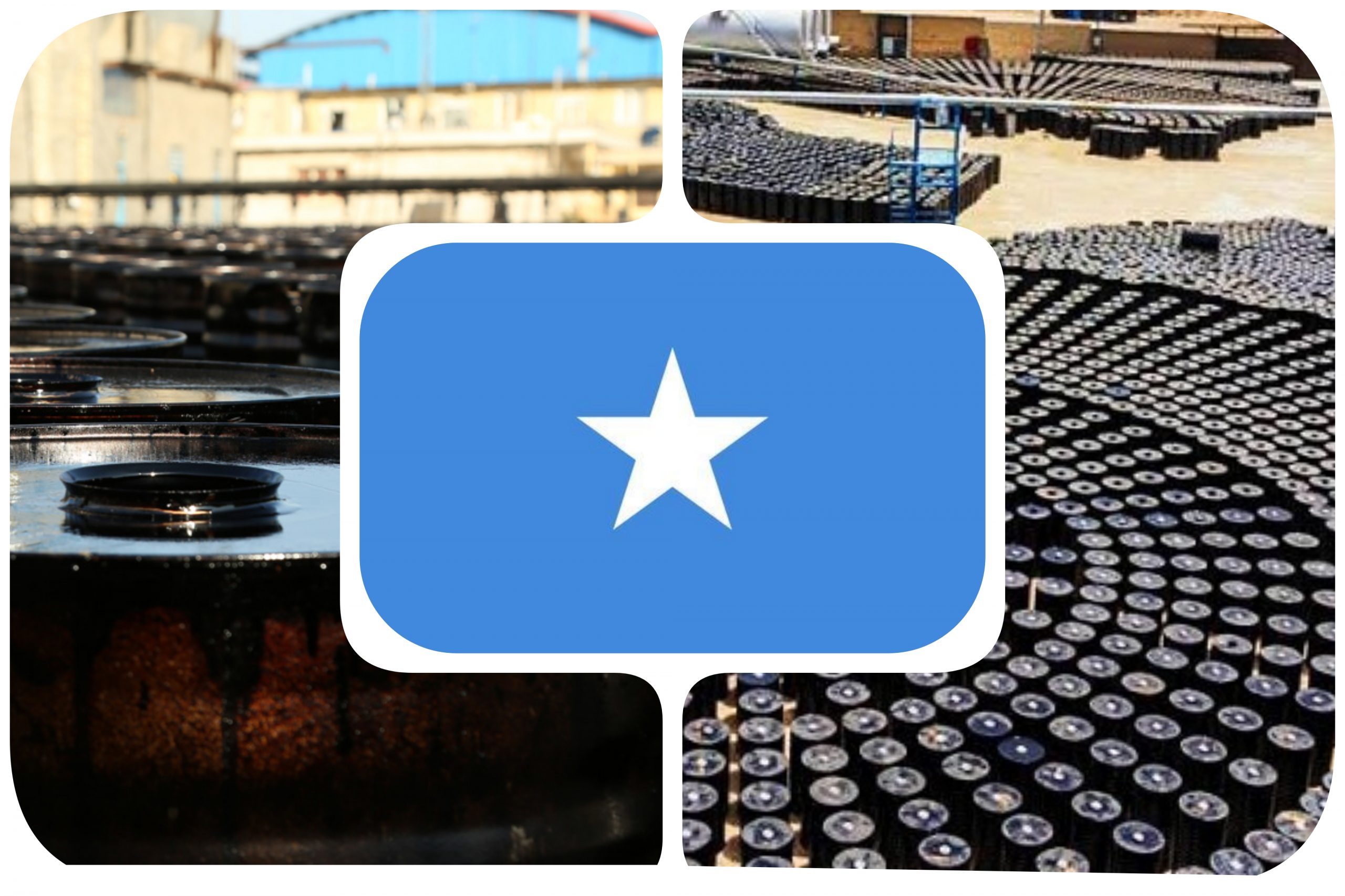
As a bitumen supplier in Somalia, Zumrut International Kimya delivers penetration grades 40/50, 60/70 and 80/100 into Mogadishu, Berbera and Bosaso in drums, jumbo bags and bulk. Somalia has the longest coastline in mainland Africa and one of the hottest climates on the continent — which means the grade recommendation here is different from almost every other African market, and getting it wrong shows up as rutting within the first hot season.
Choosing a bitumen grade for Somali conditions
Penetration grade measures hardness at 25 °C: the lower the number, the harder the binder. The advice a bitumen supplier in Somalia should give runs against the global default, and the reason is simple: this is one of the hottest countries on earth for pavement design purposes.
Berbera on the Gulf of Aden regularly records some of the highest temperatures measured anywhere in Africa. Mogadishu and the southern coast are hot and humid year round. The interior through Galgaduud and Mudug is arid with extreme daytime surface temperatures. Only the Somaliland highlands around Hargeisa and Sheikh, at 1,200 to 1,800 metres, are genuinely moderate — and even there the days are warm.
| Grade | Penetration | Character | Where it fits in Somalia |
|---|---|---|---|
| Bitumen 40/50 | 40–50 dmm | Hardest | The working default for most of the country — Berbera, the Gulf of Aden coast, the arid interior, port aprons and heavy freight routes |
| Bitumen 60/70 | 60–70 dmm | Standard paving grade | Somaliland highlands around Hargeisa, cooler elevated districts, lower-traffic regional links |
| Bitumen 80/100 | 80–100 dmm | Softest | Cold-mix patching and stockpile maintenance material only. Not a trunk road grade anywhere in Somalia |
Typical values. A batch certificate of analysis is issued before every shipment.
Why the usual advice is wrong here
Most international suppliers recommend 60/70 by reflex because it is the global default. In Somali coastal and interior conditions that is frequently a grade too soft, and the result is rutting under the first sustained hot season. A bitumen supplier in Somalia that recommends the same grade it sells in Kenya or Uganda has not thought about the site.
The exception is real, though. If your project is in the Somaliland highlands, 40/50 will be unnecessarily stiff and 60/70 is the better choice. We do not upsell a harder grade than the location needs, because a binder that is too hard for its climate cracks.
Ports and inland reach
Somalia has four working commercial ports, and the choice matters more here than in most markets because the road network between regions is limited.
| Port | Role | Serves |
|---|---|---|
| Mogadishu | Principal port of the federal government | Banadir, the southern and central regions |
| Berbera | Deep-water port on the Gulf of Aden, substantially expanded | Somaliland, and the Berbera Corridor to Ethiopia |
| Bosaso | Northern port on the Gulf of Aden | Puntland and the northeast |
| Kismayo | Southern port | Jubaland and the far south |
Berbera deserves particular attention. The port has been significantly upgraded and the Berbera Corridor road to Ethiopia gives landlocked Ethiopian projects an alternative to Djibouti. For projects in eastern Ethiopia, discharging at Berbera can be competitive. The sea leg and documentation match a Somali cargo; the transit arrangement is separate.
Between regions, plan around the port rather than the road. A bitumen supplier in Somalia quoting a single national delivery point without asking where the project actually sits is not thinking about how the cargo gets there.
Applications across Somali projects
These are the applications a bitumen supplier in Somalia is most often asked to cover.
-
Road rehabilitation
Much of the current programme is rebuilding rather than new construction — trunk routes between Mogadishu, Baidoa, Galkayo and Hargeisa, and urban networks damaged by decades of limited maintenance.
-
Port and corridor infrastructure
Berbera and Mogadishu port aprons, container yards, and the corridor roads carrying loaded freight inland.
-
Airport pavements
Runways, taxiways and aprons at Mogadishu, Hargeisa and regional airfields serving humanitarian and commercial traffic.
-
Roof waterproofing
Membranes and coatings. In this heat, the softening point of the membrane binder determines service life more than any other property.
-
Foundation and structure protection
Damp-proofing below ground and culvert sealing against the Gu and Deyr rains, which are short but intense.
-
Dust control and gravel roads
SC cutback and emulsion on unpaved routes, township roads and access tracks where a full pavement is not yet viable.
For hard grades used specifically in waterproofing membranes rather than paving, see our oxidized bitumen range.
Importing directly versus buying from a local trader
Somalia has no domestic bitumen production, so every tonne used in the country is imported. Working with an importing bitumen supplier in Somalia rather than a local reseller changes three things worth weighing.
Traceability. You receive the batch certificate of analysis for the material actually loaded, not a generic specification sheet. On donor-funded and internationally supervised projects this is frequently a contract requirement rather than a preference.
Price structure. A resold cargo carries the trader’s margin on top of landed cost. On 100 MT that margin is modest; on a multi-thousand-tonne contract it becomes a line item worth negotiating directly.
Lead time visibility. You see the production and sailing schedule rather than being told stock is on the way. For a contractor with a fixed mobilisation date, knowing the vessel and ETA is worth more than a marginally lower quote.
The trade-off is volume. Direct import starts at 100 MT, so for smaller maintenance quantities a local trader remains the practical route.
Bitumen price in Somalia
Delivered price is built from four moving parts. Any bitumen supplier in Somalia quoting a flat number without naming these is quoting a number that will not hold.
Crude and vacuum bottom. Vacuum bottom is the feedstock and its price tracks crude with a lag. The largest single component.
Ocean freight. Somalia sits close to Jebel Ali, which works in your favour — the sea leg from the Gulf is short by African standards. Routing from the Mediterranean through the Red Sea is longer and more exposed to disruption.
Packing. Drums cost more per tonne than bulk but need no receiving infrastructure, which matters where heated storage is limited. For most Somali projects drums are the practical answer rather than the premium one.
Grade. 60/70 is the global benchmark and cheapest by volume, but since 40/50 is the appropriate grade for most Somali sites, expect a modest premium over the headline market number.
Indicative levels are published on our bitumen price page and updated weekly. A firm quote is issued against a specific quantity, discharge port and delivery window.
Payment, inspection and documentation
Our standard terms as a bitumen supplier in Somalia are 30% by TT in advance, balance against a copy of the Bill of Lading. The advance secures production and loading; the balance falls due once the cargo is demonstrably on the water and documented.
A shipment travels with a commercial invoice, packing list, bill of lading, certificate of origin and the batch certificate of analysis. Customs procedures differ between the federal authorities, Somaliland and Puntland, and the applicable regime depends on which port the cargo enters — this is a practical distinction, not a political one, and your clearing agent will confirm which applies. Banking arrangements to and from Somalia also vary; confirm the payment route with your bank before contracting.
SGS, Bureau Veritas or the surveyor named in your contract can attend loading for quality and quantity — commonly required on donor-funded projects. A batch test report is issued by our QC before every shipment regardless.
Packing and container loading
Packing choice drives both delivered cost and what you need at destination. These are the options we ship as a bitumen supplier in Somalia, and drums dominate here for practical reasons.
| Packing | Unit | Per 20′ container | Notes |
|---|---|---|---|
| Steel drum | 180 kg | 80 drums = 14.4 MT | New sealed drums; needs no heated discharge facility, handles rough inland transport |
| Steel drum | 200 kg | 80 drums = 16.0 MT | Lowest packing cost per tonne in drummed form |
| Jumbo bag | 300 kg | approx. 20 MT | Lower packing cost, requires forklift or crane at destination |
| Bulk bitutainer | 20–22 MT | 1 unit | Only where the receiving plant has heated tank storage |
Container figures are typical for standard 20′ dry containers and vary with the shipping line’s payload limit. Our minimum order of 100 MT is roughly seven containers of drummed product.
Storage in extreme heat
Somali ambient temperatures create a storage problem most markets do not have. Drums left in direct sun can reach internal temperatures that soften the contents and make handling difficult, and repeated heating and cooling cycles age the binder before it ever reaches the road.
Keep drums shaded and off bare ground. Do not stack beyond the height marked on the packing, since softened material in the lower drums will deform under load. Heat only what you will use in a working session — each reheating cycle hardens the binder and moves it away from the grade you bought.
Frequently asked questions about bitumen supply in Somalia
The questions below come up in almost every enquiry we receive as a bitumen supplier in Somalia.
Which bitumen grade is right for road construction in Somalia?
40/50 for most of the country — the Gulf of Aden coast, Mogadishu, the arid interior, port aprons and freight routes. Somalia is hot enough that 60/70 is often a grade too soft, and the result is rutting in the first hot season. Use 60/70 in the Somaliland highlands around Hargeisa where altitude genuinely moderates temperature. 80/100 is for cold-mix patching only.
Why do you recommend 40/50 when 60/70 is the international standard?
Because 60/70 was not written for Somali pavement temperatures. Berbera and the Gulf of Aden coast record some of the highest temperatures in Africa, and penetration grade is matched to the heat the road will actually see. Specifying the global default out of habit is the most common cause of early rutting here. Where the site genuinely justifies 60/70 we say so — a binder too hard for its climate cracks.
Which port should we discharge at?
Mogadishu for the south and centre, Berbera for Somaliland, Bosaso for Puntland and the northeast, Kismayo for Jubaland. Because road connections between regions are limited, the port choice is largely determined by where the project sits rather than by freight cost. Send us the project location and we will confirm the routing.
Can you deliver to Ethiopia through Berbera?
Yes. The Berbera Corridor gives eastern Ethiopian projects an alternative to Djibouti, and the port has been substantially upgraded for exactly this traffic. The sea leg and documentation match a Somali cargo; the transit arrangement into Ethiopia is separate and must be set up before arrival.
What is the minimum order quantity?
100 MT, which is roughly seven 20′ containers of drummed product. Mixed grades within one shipment are accepted provided each grade reaches one full container.
How should bitumen be stored in Somali conditions?
Shaded and off bare ground. Drums in direct sun reach internal temperatures that soften the contents and make handling difficult, and each heating and cooling cycle ages the binder. Do not stack beyond the marked height, since softened material in lower drums deforms under load, and heat only what you will use in a working session.
What are your payment terms?
30% by TT in advance with the balance settled against a copy of the Bill of Lading. Banking routes to and from Somalia vary, so confirm the arrangement with your bank early — it affects timing more than customs clearance does.
Do you supply cutback bitumen and emulsion to Somalia?
Yes. MC, RC and SC cutback grades for prime coats, surface dressing and dust control, and anionic and cationic emulsions for tack coats and slurry seals. Both can be combined with penetration grades in the same shipment provided each product reaches one full container.
Specification
Bitumen 60/70
| Bitumen 60/70 | Test method | Unit | Specification |
|---|---|---|---|
| Specific gravity @ 25°C | ASTM D70 | Kg/cm3 | 1.01/1.06 |
| Penetration @ 25°C | ASTM D5 | mm/10 | 60/70 |
| Softening point °C | ASTM D36 | °C | 49/56 |
| Ductility @25 °C | ASTM D113 | cm | 100 min |
| Loss on heating(wt) % | ASTM D6 | wt % | 0.2 max |
| Drop in penetration after heating % | ASTM D5-D6 | % | 20 max |
| Flashpoint °C | ASTM D92 | °C | 232 min |
| Solubility in Trichloroethylene | ASTM D2042 | wt % | 99 min |
| Spot test | A.A.S.H.O.T102 | Negative |
Bitumen 80/100
| Bitumen 80/100 | Test method | Unit | Specification |
|---|---|---|---|
| Specific gravity @ 25°C | ASTM D70 | Kg/cm3 | 1.01/1.06 |
| Penetration @ 25°C | ASTM D5 | mm/10 | 80/100 |
| Softening point °C | ASTM D36 | °C | 42/50 |
| Ductility @25 °C | ASTM D113 | cm | 100 min |
| Loss on heating(wt) % | ASTM D6 | wt % | 0.2 max |
| Drop in penetration after heating % | ASTM D5-D6 | % | 20 max |
| Flashpoint °C | ASTM D92 | °C | 250 min |
| Solubility in CS2(wt) % | ASTM D4 | wt % | 99.5 min |
| Spot test | A.A.S.H.O.T102 | Negative |
Bitumen 40/50
| Bitumen 40/50 | Test method | Unit | Specification |
|---|---|---|---|
| Specific gravity @ 25°c | ASTM D70 | Kg/cm3 | 1.01/1.06 |
| Penetration @ 25°c | ASTM D5 | mm/10 | 40/50 |
| Softening point °c | ASTM D36 | °C | 52/60 |
| Ductility @25 °c | ASTM D113 | cm | 100 min |
| Loss on heating(wt) % | ASTM D6 | wt % | 0.2 max |
| Drop in penetration after heating % | ASTM D5-D6 | % | 20 max |
| Flash point °c | ASTM D92 | °C | 250 min |
| Solubility is CS2(wt) % | ASTM D4 | wt % | 99.5 min |
| Spot test | A.A.S.H.O.T102 | _____ | Negative |
Bitumen supply in other markets
Alongside our work as a bitumen supplier in Somalia, we ship penetration, oxidized, cutback and emulsion grades across Africa, Southeast Asia, Central Asia and South America. See the global bitumen supply guide for country-level detail, or compare grades on our penetration grade bitumen page.
Order bitumen for Somalia
Send us the grade, quantity, packing and project location — not just the port — and we will come back with a firm price, a production schedule and the documentation list for clearance. If you have a specification from a consulting engineer or a donor-funded tender and are not sure which grade meets it, send the specification instead.
Dubai +971 4 566 4998 · Ankara +90 507 246 9520 · Isfahan +98 31 3235 5207
ر
