
Description
Bitumen Emulsion for Sand Seal is an environment-friendly and economical product that is targeted at protecting road surfaces, enhancing durability, and extending pavements’ lifespan. Asphalt surfaces deteriorate over time due to processes like erosion, raveling, loss of aggregates, honeycombing, and sulphate attacks.
These damages are commonly brought about by weather conditions—frost, heat, sunlight, road salting, and snow removing—and mechanical stresses in the form of heavy loads, chains, and snowplow friction. Failure to repair them in time causes them to deteriorate further, resulting in full road surface failure and damage to supporting layers.
What is Sand Seal?
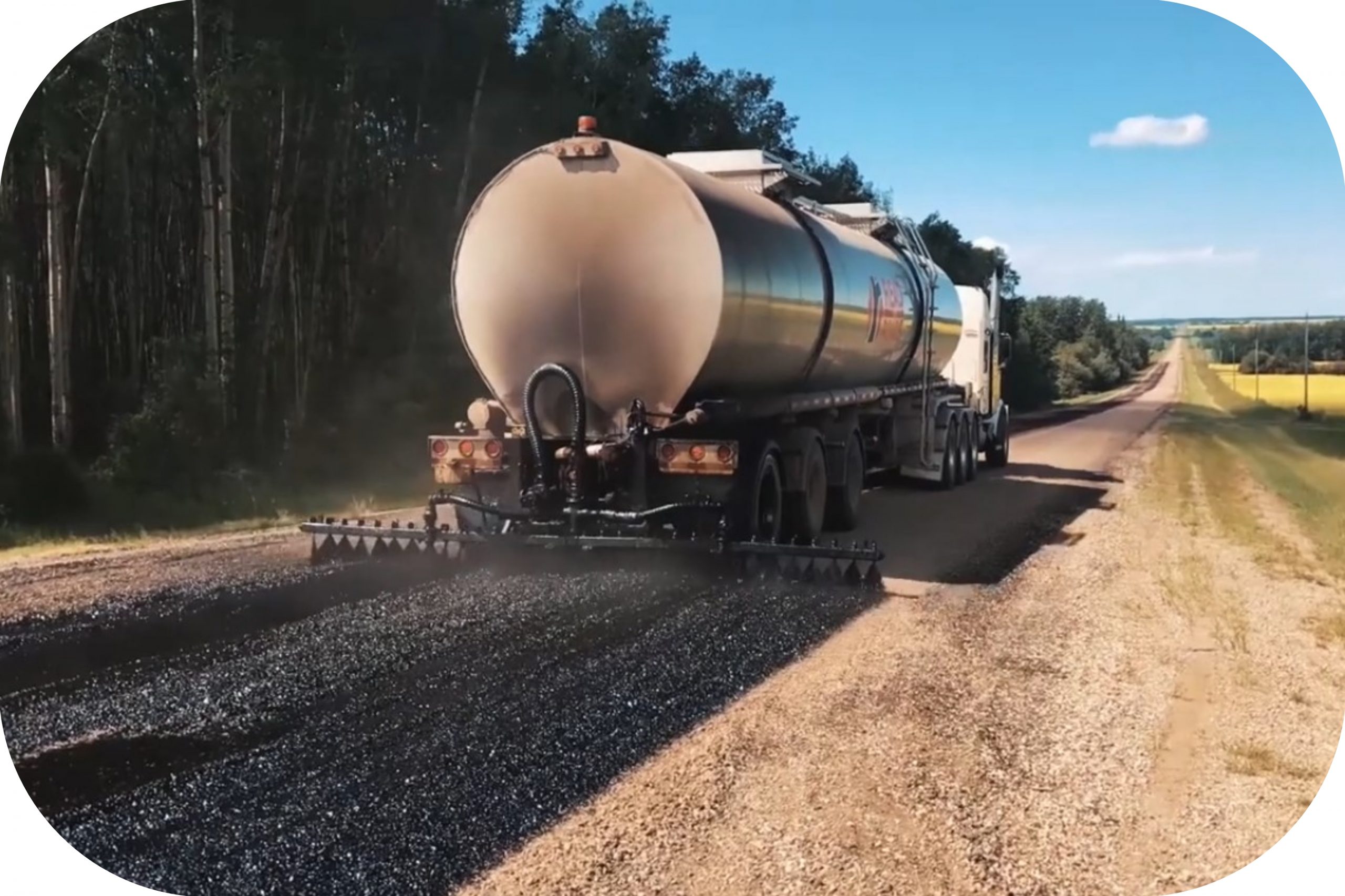
Sand seal is a popular method in which bitumen emulsion (usually CRS or CSS grades) is sprayed onto the existing road surface and instantly overlaid with fine aggregate material such as clean sand or screenings. The emulsion acts as the binder, and the aggregate provides the texture and protection.
Why Use Sand Seal?
Sealing layers such as sand seals play an essential role in minimizing road wear and tear by closing open cracks and postponing costly overlays. Not only do they provide a smooth and safe riding surface but also seal the asphalt, protecting it from water damage to the surface and layers below. This cost-efficient maintenance strategy keeps roads safe and open for longer.
Selecting the appropriate maintenance strategy is based on such factors as severity of surface wear, traffic volume and load, and type of asphalt. Early treatment—before pavement distress becomes visually apparent—can greatly increase road life.
The typical application rates are:
Bitumen emulsion: 0.7 to 1.25 liters per square meter
Sand or fine aggregate: 5.5 to 12 kilograms per square meter
This is an efficient treatment for small pavement defects, offering a cost-effective, durable maintenance solution.
Materials Used
There are various types of asphalt emulsions applicable for sand sealing, which are selected based on the aggregate used. RS1, RS2, CRS1, and CRS2 are common emulsions. Compatibility should be assured with tests for maximum efficiency.
Application Process
Application of bitumen emulsion for sand seal involves spraying a uniform layer of asphalt emulsion on the road, followed by spreading fine aggregate in a uniform fashion. The surface is then compacted using pneumatic rollers to set the aggregate tightly.
It is a process that produces a weather-resistant, water-tight surface that protects the road against water seepage, erosion, cracking, and damage due to weather and traffic. Sand sealing is especially effective in roads showing early signs of deterioration, which maintains the quality of the surface and delays costly repair work.
For best results, the treatment should be applied when the weather is good, and traffic must be restricted until the surface cures fully.
Performance and Construction Guidelines
In order to utilize an effective sand seal:
- Utilize well-graded clean sand or suitable screenings for aggregate
- Check and confirm emulsion-aggregate compatibility
- Pre-calibrate equipment for spraying and rolling plant prior to application
- Utilize adequate pneumatic rollers for uniform compaction
- Impose traffic control to protect the new seal
Perform the work under favorable weather conditions suitable to the type of emulsion
These measures ensure efficient and durable sand seal that increases durability and performance of roads.
