
Oxidized Bitumen Supplier in Kenya — Grades 85/25, 90/40 and 115/15 via Mombasa
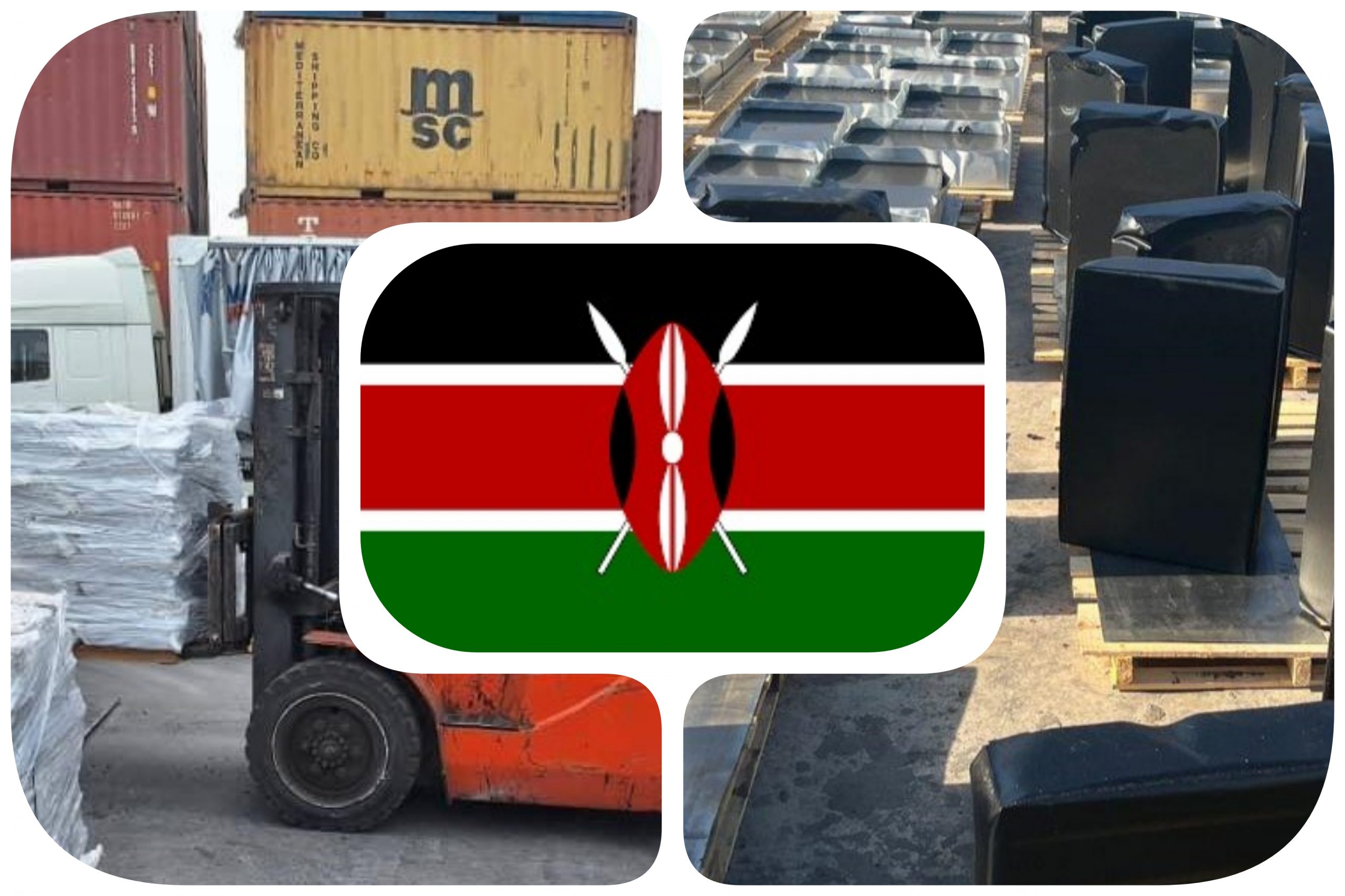
As an oxidized bitumen supplier in Kenya, Zumrut International Kimya delivers grades 85/25, 90/40 and 115/15 into Mombasa in 25 kg kraft bags, cartons and drums. Oxidized bitumen is not a paving product — it is the waterproofing and coating material, and the grade you need depends on whether the job sits on the humid coast, on the highland plateau, or in the hot arid north.
What is oxidized bitumen?
Oxidized bitumen — also called blown bitumen or blown asphalt — is produced by forcing air through hot penetration grade bitumen, usually 60/70, in a blowing column. Oxygen reacts with the lighter fractions and builds larger, more polar molecules. Two properties change measurably: the softening point rises and the penetration value falls.
The result is a harder, more heat-stable material that holds its shape at temperatures where paving bitumen would flow. It is worth being precise about what that does and does not mean: oxidized bitumen is less temperature-sensitive and more dimensionally stable, but it is also stiffer and more brittle than the feedstock it came from. It is not elastic — that property belongs to polymer modified bitumen, which is a different product for different jobs.
The grade name encodes the specification. In 85/25, the first number is the nominal softening point in °C and the second is the nominal penetration in tenths of a millimetre at 25 °C. Higher first number, more heat resistance. Higher second number, more flexibility.
Choosing a grade for Kenyan conditions
Kenya covers three distinct environments, and an oxidized bitumen supplier in Kenya who gives the same grade answer for all of them is not paying attention.
The coastal strip around Mombasa, Malindi and Kilifi is hot and very humid, with the ocean moderating peak temperatures. The highlands around Nairobi, Nakuru and Eldoret sit at 1,500 to 2,000 metres, where daytime heat is moderate and nights are genuinely cool. The arid north through Turkana, Marsabit and Garissa reaches surface temperatures well above anything the coast or the highlands see.
| Grade | Softening point | Penetration | Where it fits in Kenya |
|---|---|---|---|
| Oxidized 85/25 | 80–90 °C | 20–30 dmm | The most widely traded grade — roofing felt, torch-on membranes, foundation damp-proofing across the coast and highlands |
| Oxidized 90/40 | 85–95 °C | 35–45 dmm | Higher heat rating while staying more flexible — suits highland sites where cool nights make brittleness a real risk |
| Oxidized 115/15 | 110–120 °C | 10–20 dmm | Hardest common grade — pipe coating, industrial membranes, exposed roofs in the arid north |
Typical values. A batch certificate of analysis is issued before every shipment. Full range on our oxidized bitumen page.
The practical rule
Match the softening point to the highest surface temperature the material will see, then use the penetration value to tune flexibility. A flat roof in Mombasa or Garissa taking direct sun justifies 115/15. The same membrane specification in Nairobi is usually better served by 90/40, because the highland diurnal swing means a harder grade risks cracking at night. 85/25 covers most general waterproofing in between.
Does the humidity change the grade?
This question comes up in almost every Kenyan enquiry, and the answer is more useful than a yes or no.
Humidity does not change which softening point you need — that is set by temperature. What high humidity and rainfall do is put continuous pressure on the waterproofing system, which means the application matters as much as the grade. A correctly specified 85/25 membrane badly laid will fail on the coast faster than an under-specified one laid well in Nairobi.
Where the coast genuinely does change the material decision is packing. Kraft paper and 85 percent humidity are a poor combination, which is covered further down this page.
Applications across Kenyan projects
These are the applications an oxidized bitumen supplier in Kenya is most often asked to cover.
-
Roof waterproofing
Torch-on membranes, roofing felt and bituminous coatings on flat and low-pitch roofs. The largest single use by volume across Nairobi, Mombasa and the county towns.
-
Foundation and basement protection
Damp-proofing below ground level, particularly in coastal Mombasa where the water table sits high and drainage is limited.
-
Pipe coating
Anti-corrosion coating on buried steel for water and oil transmission, applied hot with a glass fibre or felt wrap. 115/15 is the usual specification.
-
Bridge deck sealing
Waterproofing layers protecting reinforcement on river crossings and highway structures along the Northern Corridor.
-
Expansion joints and sealing
Joint filling in concrete pavement, precast elements and hydraulic structures where movement is limited and heat resistance matters.
-
Industrial adhesives and insulation
A base component in bituminous paints, protective coatings, adhesives and acoustic or damping panels.
Mombasa and the regional hinterland
Mombasa is the largest port on the East African coast and the entry point for far more than Kenya. Any oxidized bitumen supplier in Kenya is, in practice, also supplying the corridor.
| Destination | Corridor | Approximate inland distance |
|---|---|---|
| Nairobi | Northern Corridor — road and SGR rail | ~480 km |
| Kampala, Uganda | Northern Corridor via Eldoret and Malaba | ~1,170 km |
| Kigali, Rwanda | Northern Corridor via Kampala | ~1,700 km |
| Juba, South Sudan | Northern Corridor via Eldoret and Nimule | ~1,700 km |
| Eastern DRC | Northern Corridor via Kampala and Goma | ~1,900 km |
The standard gauge railway from Mombasa to Nairobi and Naivasha has changed the economics for volume consignments to the highlands, and it is worth asking about rather than assuming road haulage. For destinations beyond Kenya, the sea leg and documentation are identical — what changes is the transit customs regime, which must be arranged before the vessel arrives rather than after.
Packing: the coastal humidity problem
Oxidized bitumen is a solid at ambient temperature, so it ships in blocks rather than as liquid. The packing choice matters more in Kenya than in drier markets.
| Packing | Unit | Per 20′ container | Notes |
|---|---|---|---|
| Kraft paper bag | 25 kg | approx. 20 MT palletised | Most common and lowest cost. Store under cover immediately — paper packing degrades quickly in coastal humidity |
| Carton with mould | 25 kg | approx. 20 MT palletised | Removable mould, easiest handling at destination, highest packing cost |
| Polyamide bag | 25 kg | approx. 20 MT palletised | Heat resistant, melts with the product. Handles humidity better than kraft |
| Steel drum | 180 kg | 80 drums = 14.4 MT | Best protection for long inland haulage to Uganda, Rwanda or South Sudan |
Container figures are typical for standard 20′ dry containers and vary with the shipping line’s payload limit. Our minimum order of 100 MT is five containers of bagged product or seven of drummed.
Storage and handling
Stored under cover, dry and out of direct sunlight, oxidized bitumen holds its specification for up to ten years. On the Kenyan coast the constraint is not time but exposure: bagged product left in the open will take up moisture through the packing and the bags will fail. Get it under a roof on arrival.
Break the material into small pieces and heat gradually using indirect heating — an oil-jacketed kettle or heating coil. Working viscosity is reached at roughly twice the softening point, around 230 °C for the common grades. Never apply direct flame to a cold mass: local overheating degrades the binder and releases fumes.
Crews need heat-resistant gloves, goggles or face shield, and flame-resistant clothing, with ventilation in enclosed areas. Full hazard and first aid data is in the oxidized bitumen MSDS, issued with every shipment.
Payment, inspection and documentation
Our standard terms as an oxidized bitumen supplier in Kenya are 30% by TT in advance, balance against a copy of the Bill of Lading. The advance secures production and loading; the balance falls due once the cargo is demonstrably on the water and documented. For repeat contracts we also work against an irrevocable LC at sight.
A shipment travels with a commercial invoice, packing list, bill of lading, certificate of origin and the batch certificate of analysis. Kenya applies the East African Community common external tariff and operates a pre-export verification of conformity programme through the Kenya Bureau of Standards, which generally means a certificate of conformity is required before shipment rather than on arrival. Requirements change; confirm the current position with your clearing agent before the vessel loads, because cargo arriving without the right certificate accrues demurrage at your cost.
SGS, Bureau Veritas or the surveyor named in your contract can attend loading for quality and quantity. A batch test report is issued by our QC before every shipment regardless.
Useful references: the Kenya Bureau of Standards publishes current conformity requirements for imported goods, and the Kenya Ports Authority publishes terminal and handling information for Mombasa.
Bitumen price in Kenya
Delivered price into Mombasa is built from four moving parts. Any oxidized bitumen supplier in Kenya quoting a flat number without naming these is quoting a number that will not hold.
Crude and feedstock. Oxidized bitumen starts as penetration grade 60/70, so its price tracks the paving market with a lag, plus the cost of blowing.
Ocean freight. Rates from the Gulf and the Mediterranean into East African ports move independently of crude and swing with vessel availability and Red Sea routing.
Packing. Bagged product carries a higher packing cost than drummed on a per-tonne basis but loads more efficiently; cartons cost more again. On the coast, the cheaper option is not always the cheaper outcome.
Grade. Harder grades cost more, because they take longer in the blowing column. 115/15 carries a premium over 85/25 for that reason.
Indicative levels are published on our bitumen price page and updated weekly. A firm quote is issued against a specific quantity, packing and delivery window.
Frequently asked questions about oxidized bitumen supply in Kenya
The questions below come up in almost every enquiry we receive as an oxidized bitumen supplier in Kenya.
Which oxidized bitumen grade should we use for roofing in Kenya?
It depends on where the roof is. 115/15 for fully exposed flat roofs in Mombasa, Garissa or the arid north taking direct sun. 90/40 in the Nairobi highlands, where cool nights make a harder grade prone to cracking. 85/25 for general waterproofing in between — it covers the majority of applications and is the most widely traded grade.
What is the difference between oxidized bitumen and penetration bitumen?
Penetration bitumen is a distillation product used as a paving binder. Oxidized bitumen is that same material after air blowing, which raises the softening point and lowers penetration. The result is harder, far less sensitive to temperature, and intended for waterproofing and coating rather than road surfacing. The two are not interchangeable.
Is oxidized bitumen elastic?
No. This is a common misconception. Oxidized bitumen is stiffer and more brittle than the penetration grade it is made from — that stiffness is exactly what makes it hold its shape on a hot roof. Elasticity is a property of polymer modified bitumen, which is a different product for different applications.
Does Kenya’s coastal humidity affect which grade we need?
Not the grade itself — softening point is matched to temperature, not moisture. What the humidity affects is packing and storage. Kraft paper bags degrade quickly in coastal conditions, so bagged product must go under cover immediately on arrival, or you should specify polyamide bags or drums instead.
Can you deliver to Uganda, Rwanda or South Sudan through Mombasa?
Yes. Mombasa is the entry point for the Northern Corridor serving Uganda, Rwanda, South Sudan and eastern DRC. The sea leg and documentation are the same as for a Kenyan cargo; the transit customs regime is separate and must be arranged before the vessel arrives. For long inland hauls we generally recommend drums over bagged product.
What is the minimum order quantity?
100 MT, which is five 20′ containers of bagged product or seven of drummed. Mixed grades within one shipment are accepted provided each grade reaches one full container.
What is the shelf life?
Up to ten years from production when stored dry, under cover and away from direct sunlight. The specification does not drift materially within that period. In coastal Kenya the practical limit is packing integrity rather than the product itself.
Do you provide third-party inspection and a certificate of analysis?
Yes to both. A batch certificate is issued by our QC before every shipment as standard. SGS, Bureau Veritas or the surveyor named in your contract can additionally attend loading for quality and quantity.
Specification
Oxidized Bitumen 115/15
| TEST SPECIFICATION | STANDARD RANGE | TEST METHOD |
|---|---|---|
| Specific gravity @25/25 C | approx. | D-70 |
| Penetration @25C | 10/20 | D-5 |
| Softening point C | 110/120 | D-36 |
| Ductility@25C | 1.5min | D-113 |
| Loss on heating (wt)% | 0.2max | D-6 |
| Flash point C | 260min | D-92 |
| Solubility in CS2 (wt)% | 99min | D-4 |
| Specific gravity @25/25 C | 1.05 approx. | D-70 |
Oxidized Bitumen 85/25
| Oxidized Bitumen 85/25 | Specification | Test method ASTM/EN13304 |
|---|---|---|
| Specific gravity @ 25/25 cg | 1.01/1.06 | D-70 |
| Penetration @ 25 c | 20/30 | D-5 |
| Softening point c | 80/90 | D-36 |
| Loss on heating(wt) % | 0.2 Max | D-6 |
| Flash point c | 250 min | D-92 |
| Solubility is CS2(wt) % | 99.5 Max | D-4 |
| Spot test | negative | ____________________ |
Oxidized Bitumen 90/40
| Bitumen 90/40 | Test method | Unit | Specification |
|---|---|---|---|
| Specific gravity @25/25 C | ASTM D70 | (Kg/m3) | 1.05 approx. |
| Penetration @ 25°c | ASTM D5 | mm/10 | 35/45 |
| Softening point °c | ASTM D36 | °C | 85/95 |
| Ductility @25 °c | ASTM D113 | Cm | 5.5min |
| Loss on heating(wt) % | ASTM D6 | Wt. % | 0.2 max |
| Flashpoint c | ASTM D92 | °C | 250 min |
| Solubility is CS2(wt) % | ASTM D4 | Wt. % | 99.5 max |
| Spot test | A.A.S.H.O.T102 | — | Negative |
Bitumen supply in other markets
Alongside our work as an oxidized bitumen supplier in Kenya, we ship penetration, oxidized, cutback and emulsion grades across Africa, Southeast Asia, Central Asia and South America. See the global bitumen supply guide for country-level detail.
Order oxidized bitumen for Kenya
Send us the grade, quantity, packing and delivery point and we will come back with a firm price, a production schedule and the documentation list for clearance. If you are not certain which grade suits your site, describe the application and the location instead — that is usually a faster route to the right answer than a spec sheet.
Dubai +971 4 566 4998 · Ankara +90 507 246 9520 · Isfahan
